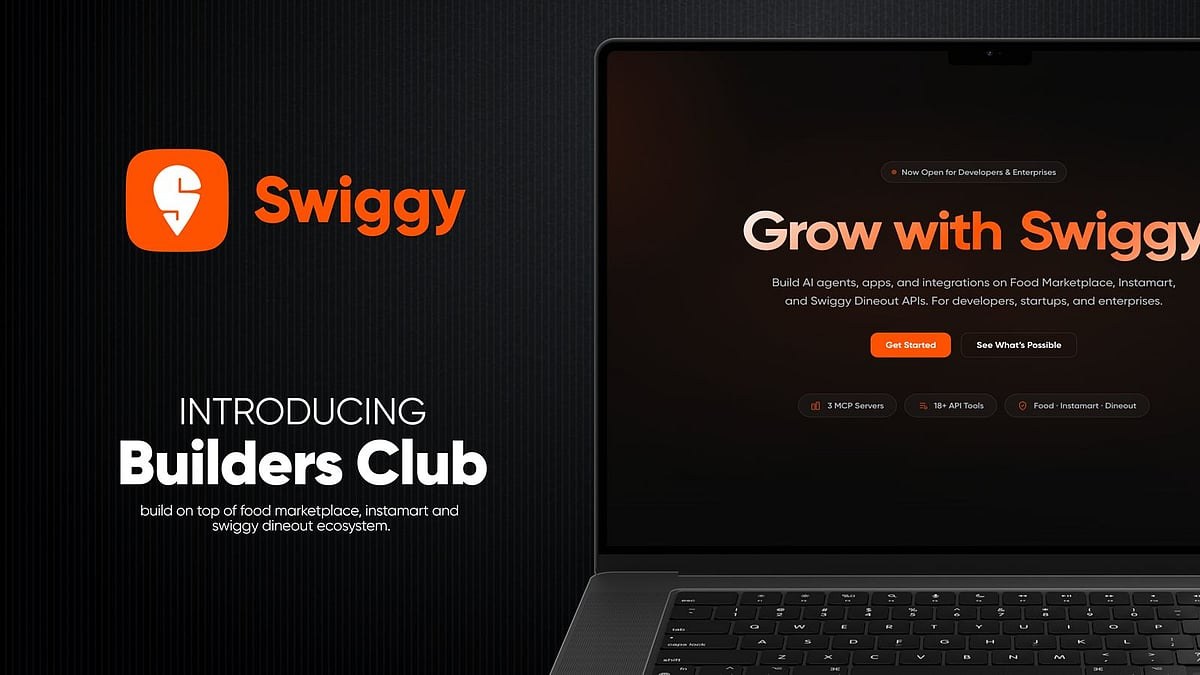
The Indian giant Swiggy has officially outgrown its status as a closed-loop mobile application, repositioning itself as the foundational layer for third-party services. The launch of the Swiggy Builders Club is more than a mere marketing gesture; it is a calculated move to ride the wave of "agentic commerce." As CTO Madhusudhan Rao stated, Swiggy is opening its Model Context Protocol (MCP) servers to third-party developers, allowing AI agents to interact directly with the infrastructure of Swiggy’s Food, Instamart, and Dineout services. In practice, this means external software can now go beyond suggesting dinner options—it can autonomously pay for a shopping cart or book a table.
The technological stack fueling this expansion relies heavily on AWS and Amazon Bedrock. To ensure the system handles peak loads while remaining cost-effective, Swiggy has deployed specialized AWS Trainium chips. According to an Analytics Insight report, this transition delivers up to 50% savings on model training costs and a 40% performance boost during inference. To manage this fleet of autonomous assistants, the company utilizes Amazon Bedrock AgentCore—a tool compatible with various frameworks and models, whether developed by Anthropic, Meta, or Mistral AI. This flexibility transforms Swiggy’s logistics into a universal API that can be seamlessly integrated into any external copilot.
For retail and tech entrepreneurs, this signals the end of the era of building proprietary delivery services. The "last mile" has officially become a commodity. Instead of sinking millions into creating their own logistics networks, businesses can now simply rent Swiggy’s ready-made infrastructure. This represents a classic paradigm shift: the company is moving away from just selling food and toward selling its operational capacity.
In our view, Swiggy is making a highly pragmatic bet. In a world where AI agents are transitioning from answering simple queries to managing real transactions, the winner is the one who controls the transactional layer. Renting access to a proven logistics engine is now cheaper and more efficient than trying to reinvent the courier-delivery wheel. For modern businesses, the choice is clear: spend years building infrastructure from scratch or plug into an existing system and start generating revenue today.