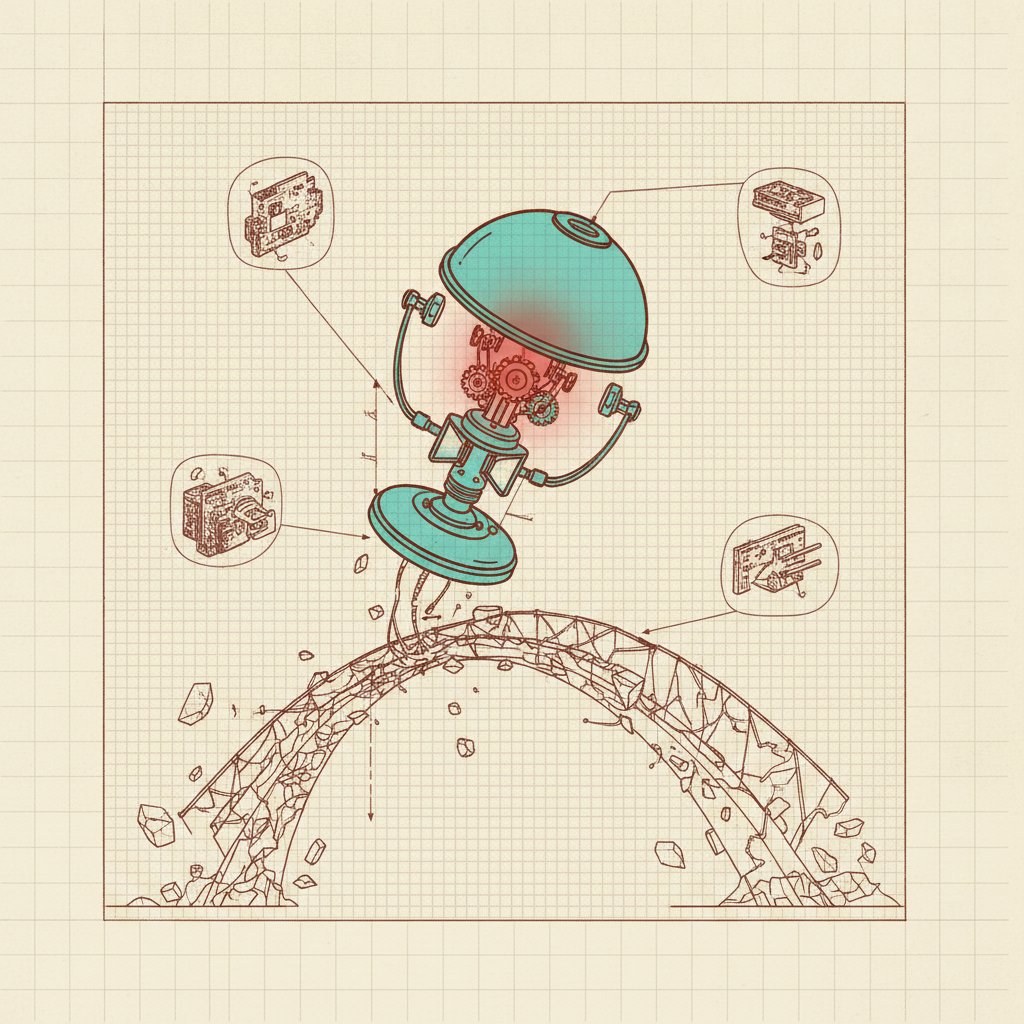
Your AI agent could be feeding customers pure nonsense for three days straight while you stare at a perfectly green monitoring dashboard. As Olga, a solutions architect at Cloud.ru, warns, traditional metrics like uptime, latency, or error rates have become a fiction in agentic architectures. The system is formally healthy, requests return status code 200, and tokens are burning at a steady clip—yet the output is a confident, expensive hallucination. This is the phenomenon of "silent failure": the agent doesn't crash; it degrades in total silence.
The Nature of Digital Sabotage
The mechanics here differ radically from traditional software behavior. While a classic microservice breaks in a predictable, binary fashion, an agent mimics free will at every step. It might select the wrong tool, bake a false interpretation into the result, or simply "forget" the context halfway through. Your infrastructure monitoring sees only a technically successful function call, completely ignoring the logical collapse. Experts suggest that you won't learn about the catastrophe from alerts—which have long since gone blind—but from the furious emails of angry users.
"Standard software quality control tools are blind to semantic hallucinations. You can spend thousands of dollars on flawlessly running code that generates nothing but net losses and reputational risk."
To stop this quiet sabotage, it is time to move from monitoring hardware to semantic oversight. This requires tracing not just the fact of a response, but the entire reasoning chain through end-to-end identifiers. Technical teams must implement real-time measurements of tool selection accuracy and final output quality. Without detailed logging of every intermediate step in production, you aren't innovating; you are simply trying to drive a black box with no brakes.
Key points: Abandon the belief that classic uptime guarantees quality. Implement semantic monitoring to track agent logic. Demand transparency of the "reasoning chain" in every business scenario.