AI · This text was generated with artificial intelligence
TRL v1.0: Moving from Experiments to Industrial Standards
The era of viewing AI as an untouchable external service is coming to a logical end. The release of TRL v1.0 transforms what began as an ambitious research experiment into a full-fledged industrial standard. For CTOs and architects, this is a clear signal: the post-training stage—the process of turning "raw" weights into specialized agents—has officially left the realm of academic chaos to become a predictable corporate workflow.
Technological Power and Flexibility
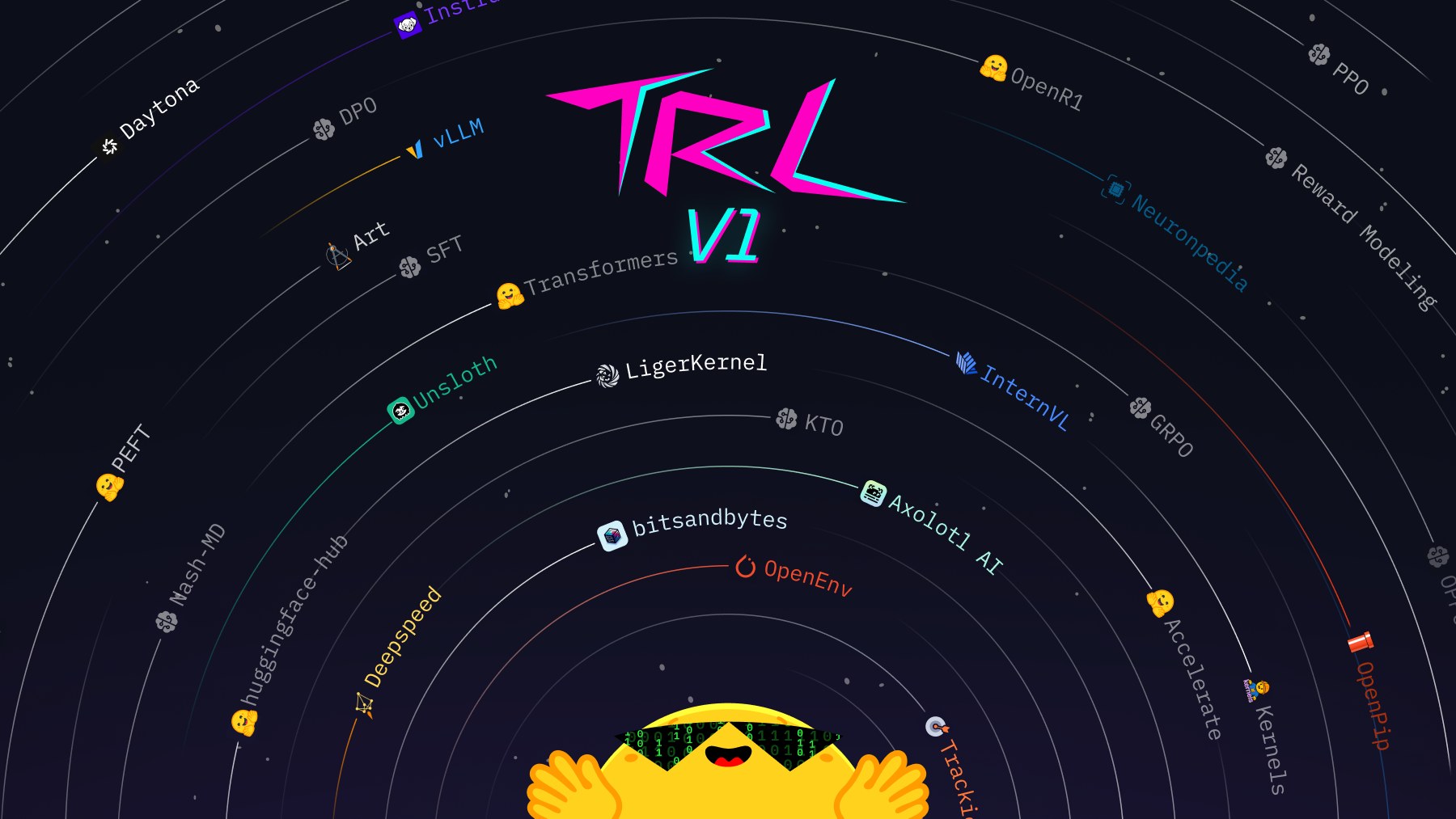
The TRL v1.0 library now supports over 75 fine-tuning methods, finally allowing teams to move beyond basic API consumption. Integrating techniques like DPO, PPO, and modern RLVR approaches such as GRPO enables businesses to bake proprietary intelligence into open-source weights.
The library architecture is split into a stable core and an experimental layer. This ensures the reliability required for enterprise-grade stacks. It allows for testing new algorithms with deterministic verifiers to combat hallucinations.
In an environment where reward model concepts become obsolete every few months, such flexibility is a matter of survival, not luxury.
The Path to Technological Sovereignty
Mastering internal tuning methods is the only path toward technological sovereignty and protection against total vendor lock-in. When you control the post-training stack, you dictate the model's behavior, safety standards, and logic. You are no longer at the mercy of sudden provider updates, pricing shifts, or the specific censorship policies of OpenAI and Anthropic.
TRL’s transition to a mature framework means engineering teams can treat model alignment as a standard part of the development lifecycle rather than a high-risk scientific gamble.
Strategic Advantage
Relying on third-party APIs today looks like a temporary fix for an expertise gap. Long-term competitive advantage belongs to those who use these 75+ methods to bake their own business logic directly into model weights, transforming them from rented tools into private intellectual property.