AI · This text was generated with artificial intelligence
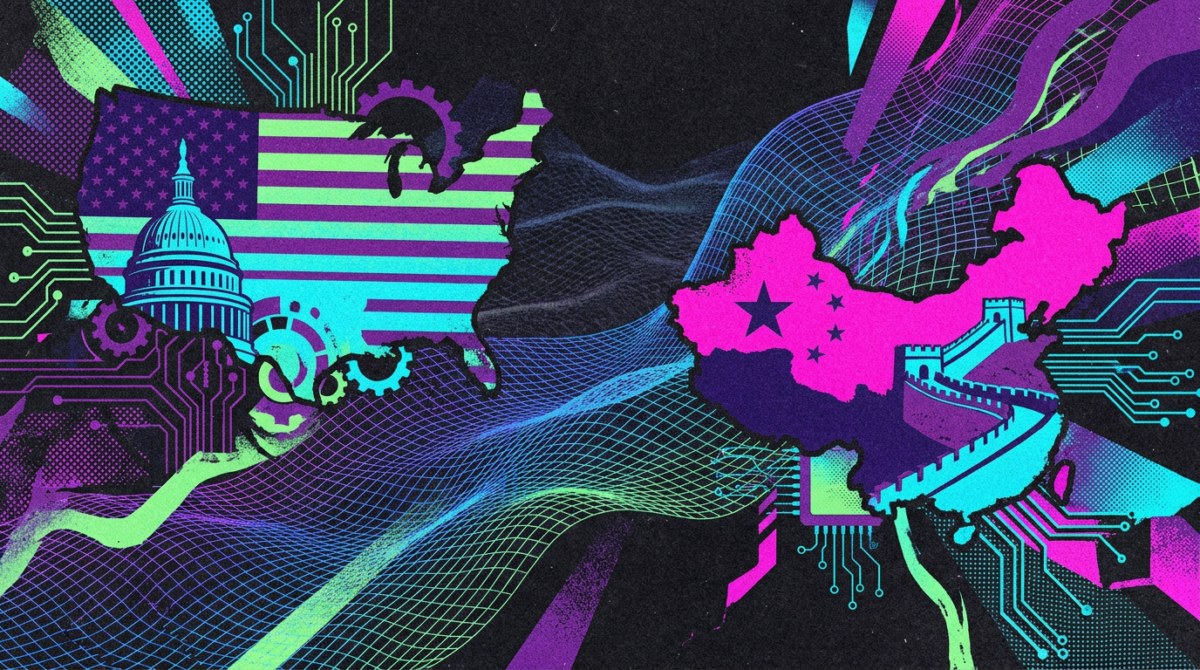
The Trump administration is systematically building a framework to exile Chinese neural networks from the Western digital ecosystem. This is no mere skirmish, but a strategy of "quiet strangulation": a pivot from loud slogans to the creation of unbearable regulatory conditions. According to Axios, the U.S. Department of Commerce, the NSA, and the White House have been developing mechanisms since early 2025 to transform the use of Chinese tech into a toxic liability. The global open-source honeymoon—where efficiency and low costs justified any code origin—is officially over. For international business, the era of choosing models based on benchmarks rather than passports is closing: Washington has definitively labeled Chinese AI a fundamental security threat.
The Point of No Return: Kimi K3 and Moonshot AI
While White House advisors previously suggested soft regulations to avoid breaking supply chains, the technological breakthroughs of 2025 have erased those sentiments. The release of the Kimi K3 model by Moonshot AI served as the ultimate trigger: the Chinese lab proved it could beat American frontier models at their own game, offering comparable power for less money. The reaction was immediate. Internal Department of Commerce documents suggest that the reshuffling of personnel in favor of "hawks" was driven by the need to protect not just national security, but the market capitalization of Google, OpenAI, and Anthropic. This is about defending the U.S. AI stock market bubble, which cannot tolerate dumping from the East.
"What is happening now is a slow but durable process," explained an Axios source close to the government. The strategy relies not on direct bans, which are easily challenged, but on procurement rules and public pressure.
The mechanics of "soft power" are yielding hard results. By imposing legal liability on American cloud providers for hosting Chinese models, the administration is creating an environment where using any Chinese API becomes a compliance nightmare. This is a pure FUD (Fear, Uncertainty, and Doubt) strategy. Companies will preemptively abandon effective PRC solutions to avoid the steamroller of audits, and the state won't even need to pass laws that might hurt its own hyperscalers.
The Economics of Forced Import Substitution
The economic echo of this polarization is already hitting the pockets of CTOs worldwide. Many startups built their products on Chinese open-source foundations because they were cheap and effective. Now, the U.S. Department of Commerce is explicitly hinting that these models may contain backdoors. Any company operating in the U.S. market is finding its AI stack turned into a toxic asset. While platforms like Hugging Face try to argue that open models can be safer than closed corporate giants, Washington is uninterested—the only thing that matters is the developer’s registered address.
This regulatory wall is effectively splitting the global tech stack. As OpenAI strategist Dean W. Ball notes, the goal is to create just enough risk to deter businesses without crashing the cloud market. The result is a market bifurcation where the cost of a mistake in model selection is no longer measured in token prices, but in lost access to Western markets and potential lawsuits. For businesses, this is a signal to accelerate the transition to sovereign local inference: in a world divided into two camps, the only way to maintain control is to keep model weights on your own servers, far from geopolitical storms.