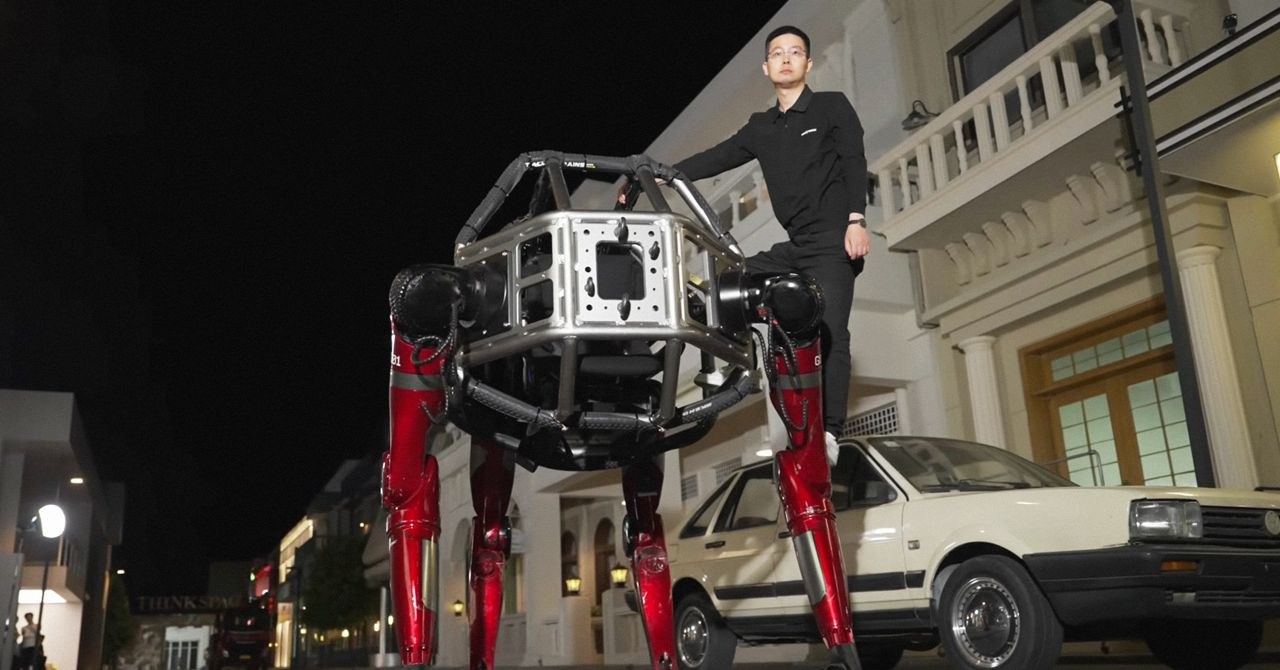
Robotics is rapidly evolving from a niche of agile but fragile assistants toward heavy-duty, and frankly, destructive machinery. Hangzhou-based startup Unitree, which built its reputation on budget-friendly quadrupeds and humanoids, has officially outgrown its status as a gadget maker for enthusiasts. Their new GD01 project isn't just another marketing stunt for social media; it is a viable commercial product. We are looking at a giant transformer capable of walking, crawling, and literally smashing through walls.
While Unitree was previously associated with amusing dancing robots, the GD01 is a grit-filled bid for dominance in the heavy industrial equipment segment. The company's strength has always lied in aggressive price-cutting and access to China’s bottomless supply chain. While American competitors issue six-figure invoices, Unitree offers its G1 model for $15,000—ten times cheaper than its U.S. counterparts. This pricing strategy made the company the world's largest supplier of platforms for AI training, and the GD01 scales this strategy into the heavy-duty class.
As demonstrated by Unitree CEO Xingwang Hu, the machine features an open cockpit for a pilot integrated directly into the robot's "torso." However, the platform remains a hybrid: it can be operated manually or function autonomously, transforming into a four-legged "crab" configuration for enhanced stability on uneven terrain.
Yet, behind the flashy footage of the bright red robot crushing concrete blocks, significant technological gaps remain. Unitree’s current fleet still struggles with fine motor skills and autonomy in unstructured environments. There is a certain irony in the company’s official disclaimer: after showcasing a wall-breaking mechanical beast, Unitree urged users to operate it in a "safe and friendly manner." This contrast between raw physical power and calls for caution highlights the industry's primary challenge—the lack of reliable control algorithms for such immense force.
The launch of the GD01 clearly shows that China is betting on physical impact and chassis versatility rather than narrow specialization. While Western laboratories refine the micro-movements of robotic fingers, Unitree is building platforms prioritized for high-force infrastructure contact. As the company prepares for an IPO, the GD01 serves as a perfect showcase: the barrier between science fiction and commercial hardware has finally collapsed. This is no longer a laboratory prototype, but a heavy mobile platform designed to change the landscape literally, not just metaphorically.