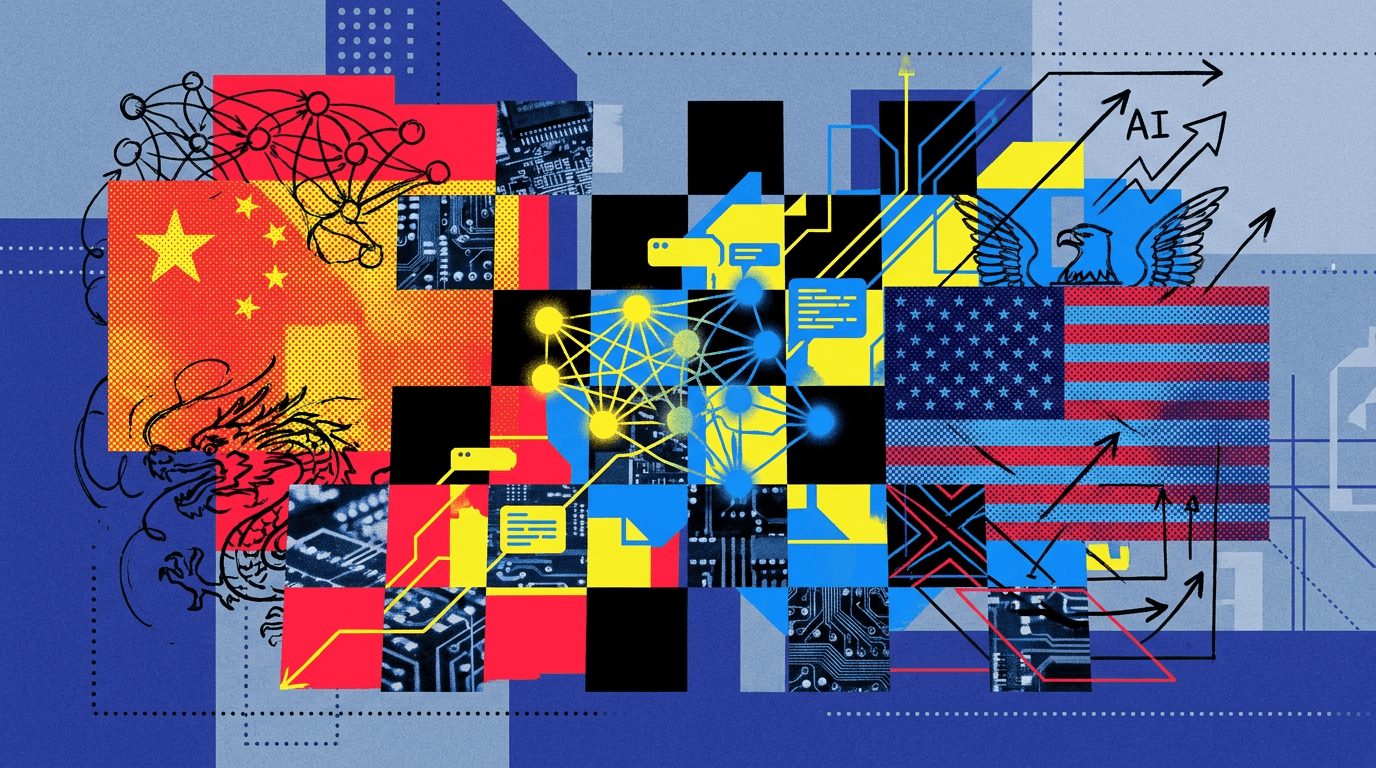
Surge AI openly advertises on its website that its products are built by the same experts behind frontier-lab work. Behind that marketing copy sits a lucrative commercial channel: American data firms are supplying Chinese artificial intelligence laboratories with roughly $500 million worth of AI training data, according to an investigation by ChinaTalk.
At least nine US data vendors, including Mercor, Surge AI, AfterQuery, and Turing, have engaged in this pipeline. The core merchandise consists of reinforcement learning environments—simulated worlds where AI models train on concrete tasks like coding, financial analysis, or office work. The underlying mechanics bypass export controls entirely: regulatory restrictions have targeted hardware, yet the synthetic data and simulation setups that train models remain completely outside those boundaries. As ChinaTalk details, these vendors navigate around international restrictions while serving rival labs because the Bureau of Industry and Security has not yet extended export controls to synthetic training environments, leaving an open regulatory void.
The Economics of Shared Simulation
Chinese laboratories intentionally purchase the exact products previously created for Anthropic or OpenAI, the ChinaTalk report says. This procurement strategy eliminates trial-and-error costs. By buying proven data sets, Chinese developers skip expensive in-house engineering and avoid wasted training runs. Because Chinese hardware suffers from acute memory bottlenecks, those compute savings are particularly valuable for laboratories operating under processing constraints.
"Chinese labs deliberately buy the same products previously sold to Anthropic or OpenAI, the report says."
Beyond purchasing specialized simulation worlds, Chinese teams deploy powerful American systems like GPT or Claude as teachers, using their outputs directly as training examples for model distillation. Combined with off-the-shelf reinforcement learning environments, this pairing allows Chinese research groups to narrow the performance gap with far smaller computational budgets. This shift reflects broader market dynamics: data from the OpenRouter platform confirms a tectonic shift: since February, the traffic share of Chinese models has consistently remained above 30%, peaking at 46%.
Offshore Shells and Subcontractor Leaks
Commercial arrangements rely on cross-border logistics. ByteDance, for example, maintains procurement offices in Singapore and San Jose to manage transactions. Meanwhile, AfterQuery reportedly draws a significant share of its annual recurring revenue from Chinese customers, with ChinaTalk pointing to Forbes reports of approximately $100 million in ARR, although the sales could not be independently verified.
The entire supply chain came to light through a combination of anonymous sources and sloppy operational security among subcontractors, according to ChinaTalk. US data vendors outsource much of their environment creation and data curation to low-paid workers in developing countries, especially India. Subcontractors frequently published actual client names on LinkedIn profiles and résumés, despite instructions to rely strictly on code names.
"Domains with dual-use potential pose particular risks: Coding environments improve software development but can also sharpen offensive cyber capabilities."
ChinaTalk authors emphasize that these environments present distinct dual-use capabilities. While coding setups accelerate software development, they also sharpen offensive cyber capabilities. In parallel, biological simulation environments could enhance gene synthesis and touch bioweapons-relevant applications. Consequently, the authors argue that the Bureau of Industry and Security should subject dual-use training environments to formal export controls.
Countering these security warnings, the authors stress that the situation remains far from one-sided. By depending on US baseline work, Chinese laboratories structurally trail American peers by at least a few months. Furthermore, sensitive environments covering biology, chemistry, cybersecurity, chip design, and investment banking are increasingly built in-house at American frontier companies rather than outsourced to third-party brokers.
While policymakers focused on building strict trade barriers around advanced silicon, private data brokers turned pre-packaged frontier training data into a half-billion-dollar export product.
For comparison
Washington blocked access to advanced silicon, but left an open regulatory vacuum around the training environments those chips run. Consequently, Chinese labs conserve scarce memory bandwidth by procuring simulation suites already refined for Anthropic and OpenAI, capturing up to 46% of OpenRouter traffic while skipping costly engineering dead ends. A fortified wall around physical processors now sits beside a half-billion-dollar commercial conduit for algorithmic training grounds. While regulators guarded the silicon gates, data vendors quietly packaged and sold the answer keys.