AI · This text was generated with artificial intelligence
The U.S. Navy has officially traded the 'alignment' safety net for tactical speed. In a move that signals the end of the experimental era, Acting Secretary of the Navy Hung Cao signed the 'Strategy to Weaponize Data and Artificial Intelligence.' The document is less a roadmap and more a manifesto: it explicitly states that the risk of falling behind adversaries is now far more dangerous than the risk of deploying glitchy, unaligned AI. While Silicon Valley debates how to make models 'polite,' the Pentagon is busy legalizing imperfect systems for the sake of strategic dominance.
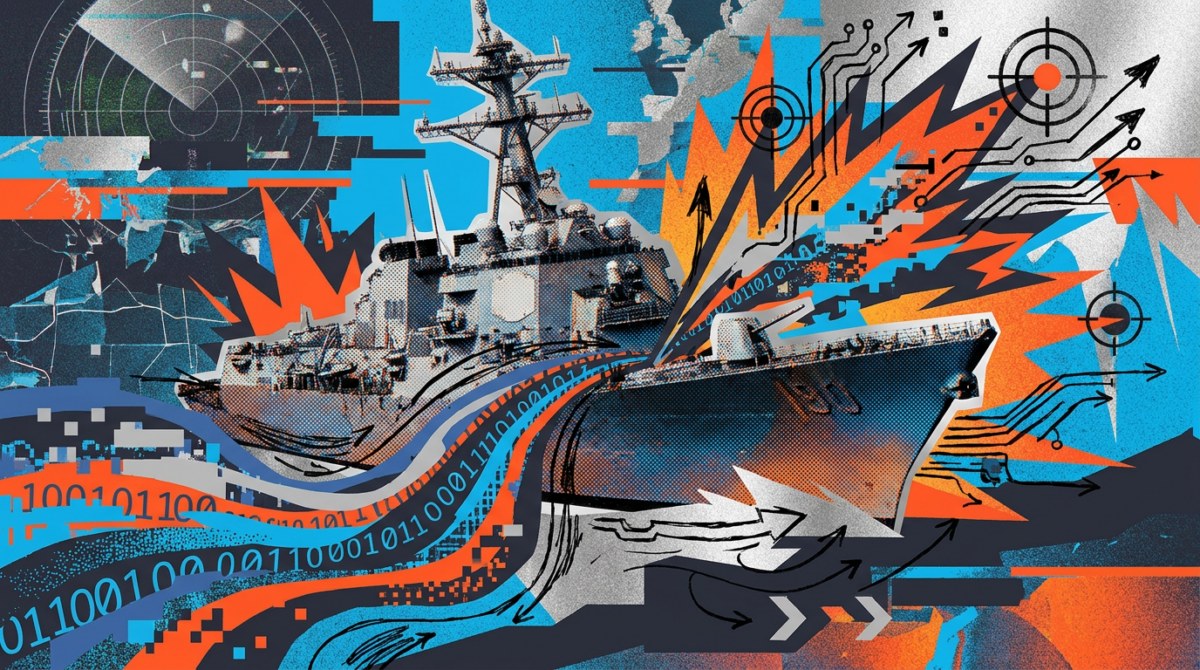
At the heart of this institutional pivot is the 'Bits2Effects Cycle,' a framework designed to slash the 'Mean Time to Effect' (MTTE). According to Hung Cao, the objective is to build an 'AI-first' fleet that processes data faster than any rival can react. This isn't about back-office automation; the Navy plans to run large language models and agentic AI directly on warships and expeditionary units, even when they are completely cut off from the cloud. The message is clear: a flawed model on a destroyer is better than a perfect one stuck in a testing lab.
To bridge the gap between ambition and reality, the strategy mandates a 100% increase in data and machine learning engineers by the end of fiscal year 2029. More importantly, an 'AI War Council' will now have the power to tear up the bureaucratic rulebook, pre-approving wartime changes to data sharing and deployment on the fly. The U.S. Military is effectively betting that it can manage technical debt in the field more easily than it can recover from losing an arms race. In this new paradigm, 'good enough' is the new gold standard, provided it arrives first.