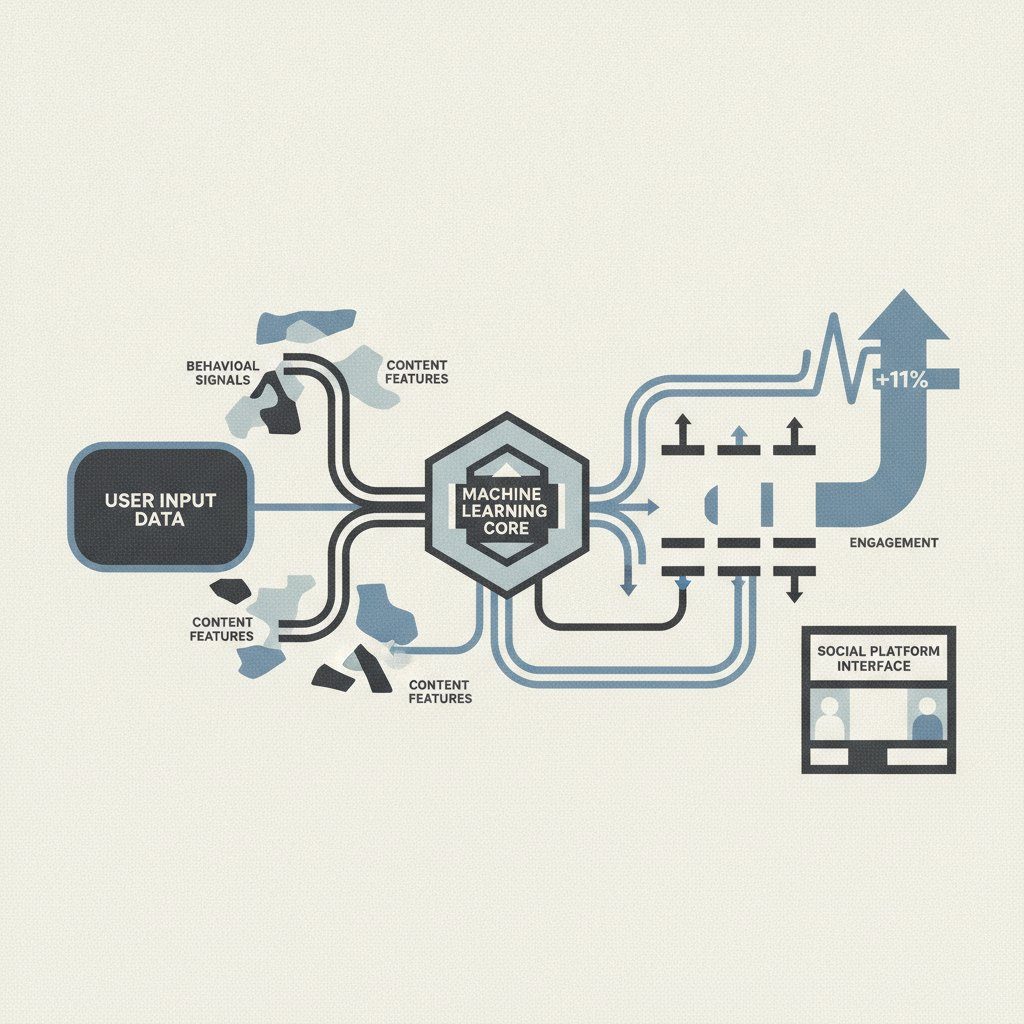
Around 90% of ranking tasks at VK are now resolved through configuration rather than writing new code. According to the VK AI team, the changes affected the Discovery platform, a unified infrastructure layer for recommendations, search, and advertising across all company products. Previously, launching new verticals took weeks. Moving to a unified platform significantly reduced capital and operational expenditures (CAPEX/OPEX): instead of supporting a fragmented zoo of models with duplicating pipelines, engineers focused on a single contour, reducing infrastructure support costs and accelerating time-to-market. At the same time, migrating search scenarios to the shared infrastructure carries certain risks: it is critically important whether the platform can maintain strict SLAs as search query complexity grows and load scales.
Unified platform over routine
A vertical is described in a config (object catalog, candidate sources, profile, optimization targets), and the platform automatically deploys services, data flows, monitoring, and an A/B loop.
Through this approach, engineers deployed 15 new verticals, including localized scenarios like comment ranking.
Automation and change management
Discovery Portal integrated configuration management, service topology, and monitoring. The tool serves all VK AI developers, processing dozens of changes daily.
Changes are validated before deployment, rolled out incrementally with metric comparisons, and rolled back if performance drops.
Reverting to a stable version is executed in a single step. In loops constrained by millisecond-level latency, engineers implemented dynamic batching, tail latency control, and a fallback route to simpler models.
The economic impact is reflected in key product metrics and the unit cost of advertising. User engagement time with the VKontakte feed grew by 11%, and friend additions from recommendations increased nearly 2.7-fold. In VK Clips, viewing time rose by 22%, and on the main page of VK Video, by 20%. In the advertising segment, following the migration to the platform, the conversion rate from impressions to target actions for community messages grew by 46%, while the cost per action dropped by 13%. For CPC website ads, target actions rose by 56%, and their cost dropped by 24%. As a next step, the team plans to migrate search infrastructure to Discovery.
What doesn’t add up
Does betting on a single shared foundation actually pay off when costs shrink? Consolidating Discovery reduced infrastructure spending and enabled the launch of 15 new verticals, yet it trapped ads, video, and upcoming search within the same platform trade-offs. Relying on fallback routes to simpler models to survive millisecond latency limits inevitably curtails how sophisticated these workloads can get. Trimming server bills and pipeline code ultimately means that under heavy load, advanced algorithms quietly step aside for basic fallbacks.