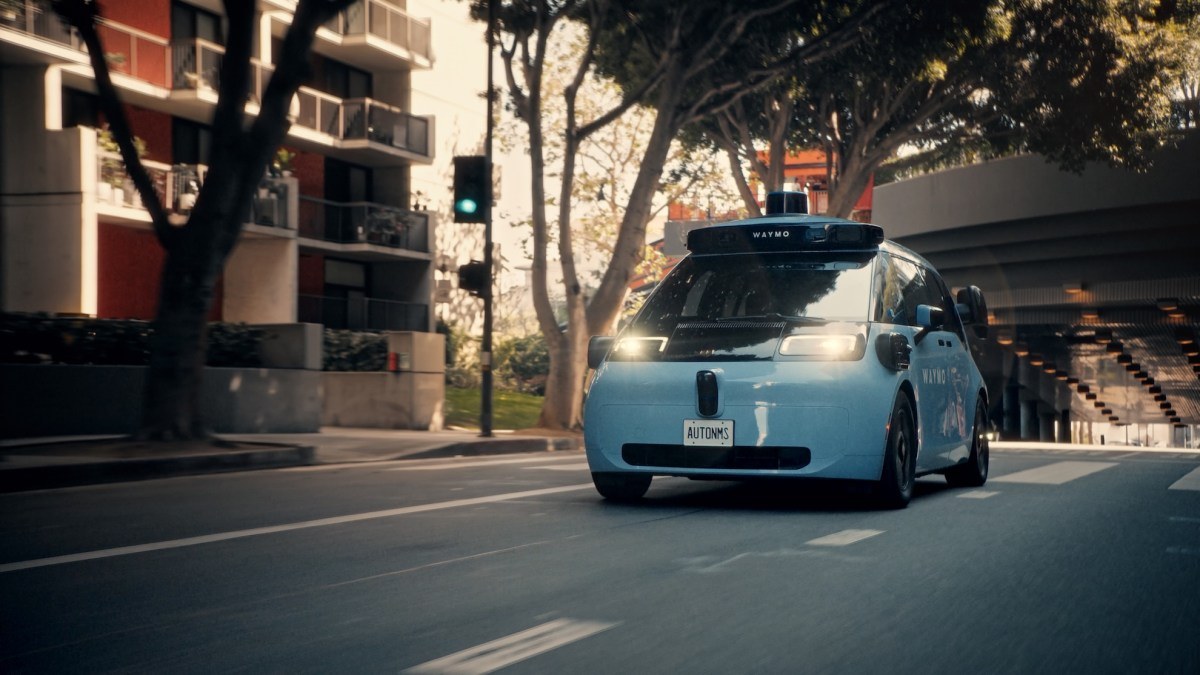
Autonomous vehicle fleets hit a stubborn wall when scaling: sensor suites grow exponentially heavier on data, choking compute budgets and turning onboard thermal management into an expensive liability. Pumping massive multi-gigabit camera and lidar streams into general-purpose silicon destroys power efficiency and inflates the vehicle's bill of materials. Waymo's answer in its sixth-generation hardware platform is straightforward: bypass merchant-silicon inefficiencies by integrating proprietary, custom-designed ASICs directly into the vehicle's compute rack.
Custom Pre-Processing Architecture
The architectural pivot debuts on Waymo's next-generation Ojai vehicle, rolling out across Phoenix, Los Angeles, and San Francisco as the company scales commercial operations. Behind the targets for lower total cost of ownership (TCO) lies a deliberate vertical integration play. Waymo engineered a dedicated 5 nm application-specific integrated circuit (ASIC) solely to ingest and preprocess raw telemetry before it ever hits the primary autonomous driving compute cluster.
This frontend stage handles data streams from the Ojai platform's 13 high-fidelity cameras. By offloading sensor ingestion to fixed-function silicon, Waymo hits over 1,000 TOPS of compute throughput, keeping latency tightly deterministic under dense urban edge cases.
The custom 5 nm ASIC delivers over 1,000 TOPS of compute performance, positioning the architecture within the performance envelope of Nvidia's DRIVE AGX Thor processor.
While corporate communications naturally frame this as "unmatched efficiency," the architectural reality is about hardware economics: dedicated acceleration slashes power draw per vehicle while insulating Waymo from merchant silicon shortages, building a defensible moat against rivals like Tesla and Zoox.
Supply Chain and Ecosystem Strategy
Designing custom automotive-grade silicon does not mean severing external supply chains. Waymo disclosed that its compute ecosystem still integrates merchant partners, citing AMD, Micron, Nvidia, Samsung, SanDisk, Socionext, and TSMC. Instead of locking itself into a single vendor's full-stack automotive platform, Waymo blends commodity compute with proprietary ASICs to isolate perception workloads.
Engineering teams scaling AV architectures should profile the latency and thermal overhead between their raw sensor ingest pipelines and primary compute clusters, assessing whether moving early-stage perception parsing to dedicated ASICs reduces overall compute wattage and vehicle unit costs.