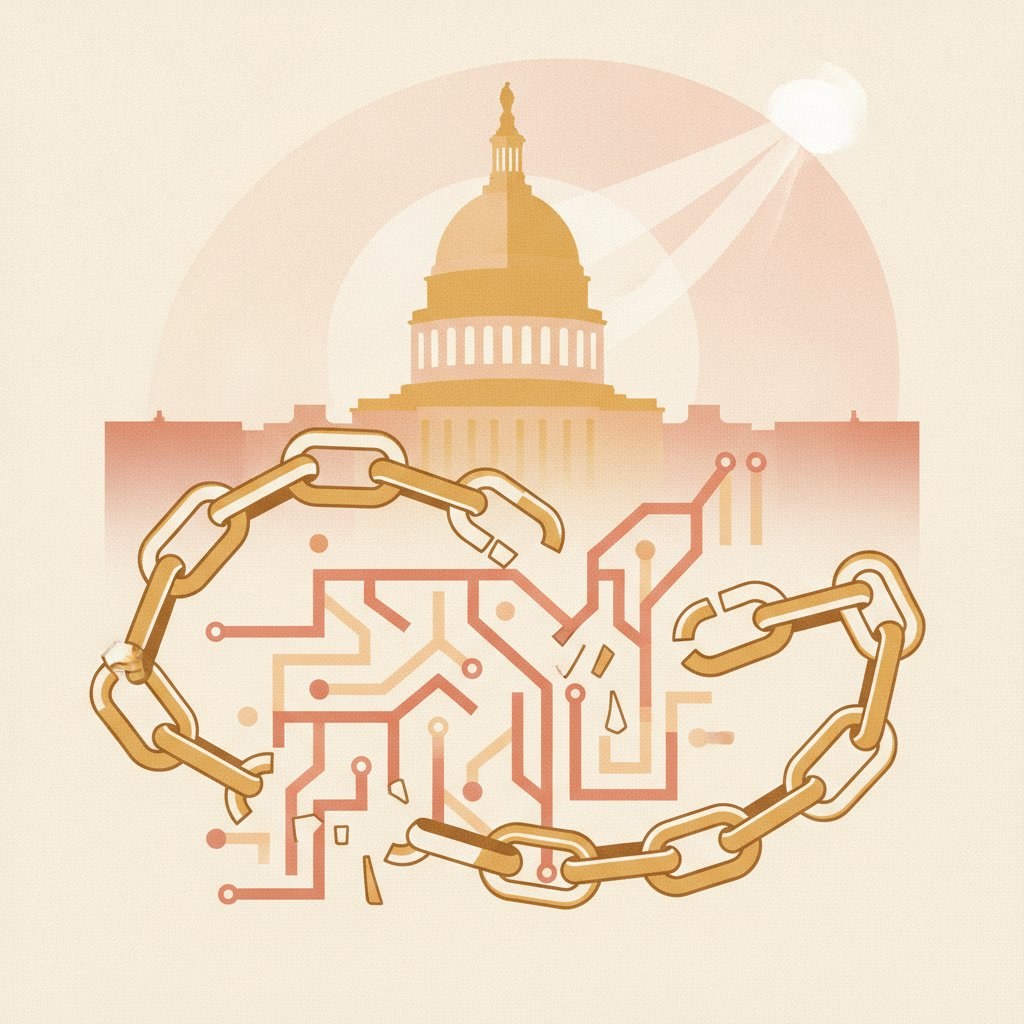
The Trump administration has officially split the AI market into two distinct classes: the regulated giants and the exempt disruptors. According to fresh guidelines discussed with industry brass, open-weight models from U.S. companies are now exempt from government pre-release testing. This isn't just a administrative tweak; it is a strategic decoupling. While OpenAI, Anthropic, and Google prepare for federal audits, companies like Meta and Mistral (through its U.S. presence) have been handed a fast-pass to market. The practical effect is a dual-track industry where 'open' is synonymous with 'unburdened.'
The Burden of Proprietary Compliance
The new framework targets the heavyweights. Any closed U.S. model demonstrating high-tier capabilities in cybersecurity or hacking must now navigate a voluntary yet high-stakes federal review. As Amrith Ramkumar reported, this oversight creates a new bottleneck for the 'Big Three.' While these organizations submit to safety audits based on performance benchmarks, their release cycles will inevitably stretch. For enterprise strategists and CTOs, the math is changing: integrating a closed-source API now involves betting on a provider whose roadmap is subject to government red tape.
The new framework is seen as most likely to affect OpenAI, Anthropic and Google while exempting open models made by U.S. companies.
This regulatory relief serves as a massive tailwind for the open-source ecosystem. By slashing compliance overhead, the White House is signaling that the proliferation of American-made open code is a geopolitical priority. It appears the administration has realized that trying to bottle up code that’s already destined for distribution is a fool’s errand. Instead, they are weaponizing it. By flooding the global market with American open weights, they aim to starve international competitors of market share, making U.S. standards the global default by sheer volume.
Competitive Realignment and Market Risk
This policy shift forces a brutal recalculation of the 'closed' model premium. Traditionally, proprietary models justified their cost and restrictive access through superior performance. However, the new benchmarks imply that the more capable a closed model becomes, the more federal friction it attracts. This creates a perverse incentive structure: proprietary labs are penalized for excellence with increased scrutiny, while open-source developers can ship high-performance weights without a single federal check-in. The performance gap that once protected the valuations of closed-model companies is narrowing, and the regulatory cost of staying 'closed' is rising.
For the business community, the takeaway is pragmatic rather than ideological. The White House has essentially created a safe harbor for open-weight architectures. As the cost of compliance and the risk of release delays mount for proprietary systems, the shift toward open-source solutions is no longer just about avoiding vendor lock-in—it's about operational agility. In this new landscape, the fastest way to innovate is to choose the path the government has agreed to ignore.