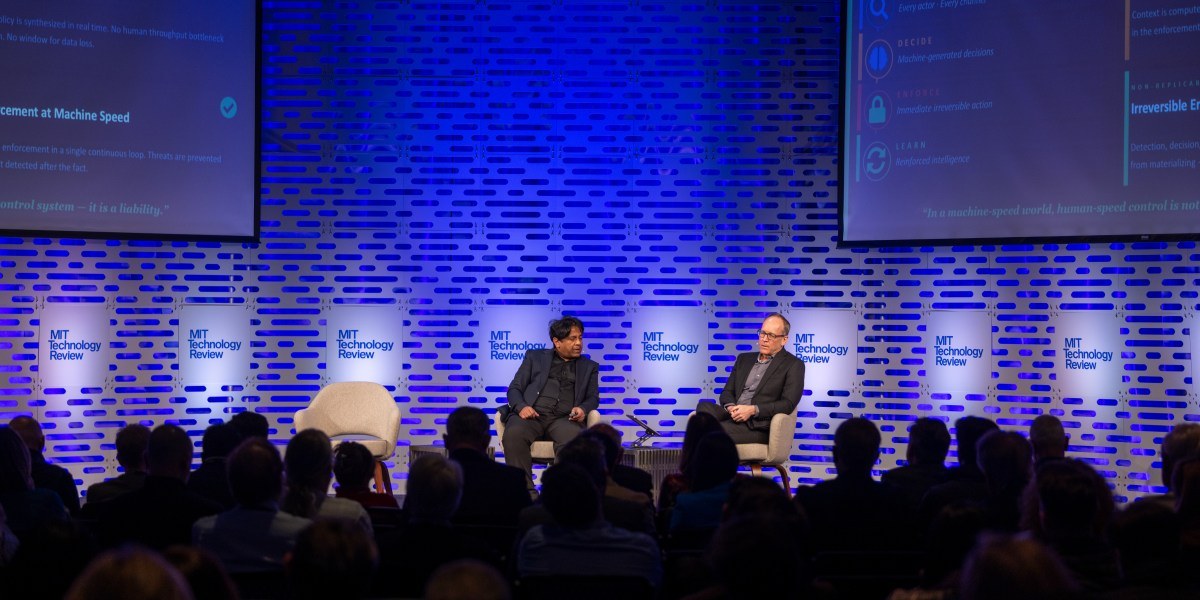
Traditional cybersecurity frameworks were losing their edge long before artificial intelligence became a core component of the modern tech stack. Speaking at MIT Technology Review’s EmTech AI conference, Tariq Mustafa, co-founder and CEO of GC Cybersecurity, argued that an expanding attack surface and skyrocketing system complexity have turned legacy approaches into a sinkhole for corporate resources. We have reached a point where security can no longer be a decorative layer applied to a finished architecture after the fact.
According to Mustafa, AI must serve as the system’s foundation rather than an external patch. Failing to integrate security at the core means businesses are effectively subsidizing their own vulnerabilities. The current landscape demands a shift toward autonomous data protection capable of countering industrial-scale threats. Mustafa’s work leverages AI inference and planning methods to build fourth- and fifth-generation data loss prevention platforms. These systems rely on autonomous algorithmic interaction to classify data and maintain regulatory compliance.
The historical reliance on manual event correlation and standard Intrusion Detection/Prevention Systems (IDS/IPS)—technologies Mustafa himself once helped deploy at Nevis Networks and Symantec—is now definitively losing the arms race. These tools simply cannot match the speed of modern risks amplified by the same AI technologies. While many organizations continue to funnel budgets into classic firewalls and SSL/IPSec protocols out of habit, the technological gap between legacy tools and self-learning platforms is becoming a critical liability.
Mustafa, who holds numerous USPTO patents, advocates for algorithmic solutions as the only way to survive in hyper-scale environments. There is a certain irony in the situation: the proposed cure for AI-driven insecurity is the very same proprietary AI offered by the experts diagnosing the crisis. However, unless companies shift their spending from reactive monitoring to preventive systems that anticipate attacker moves, any defense strategy will remain nothing more than an expensive illusion.