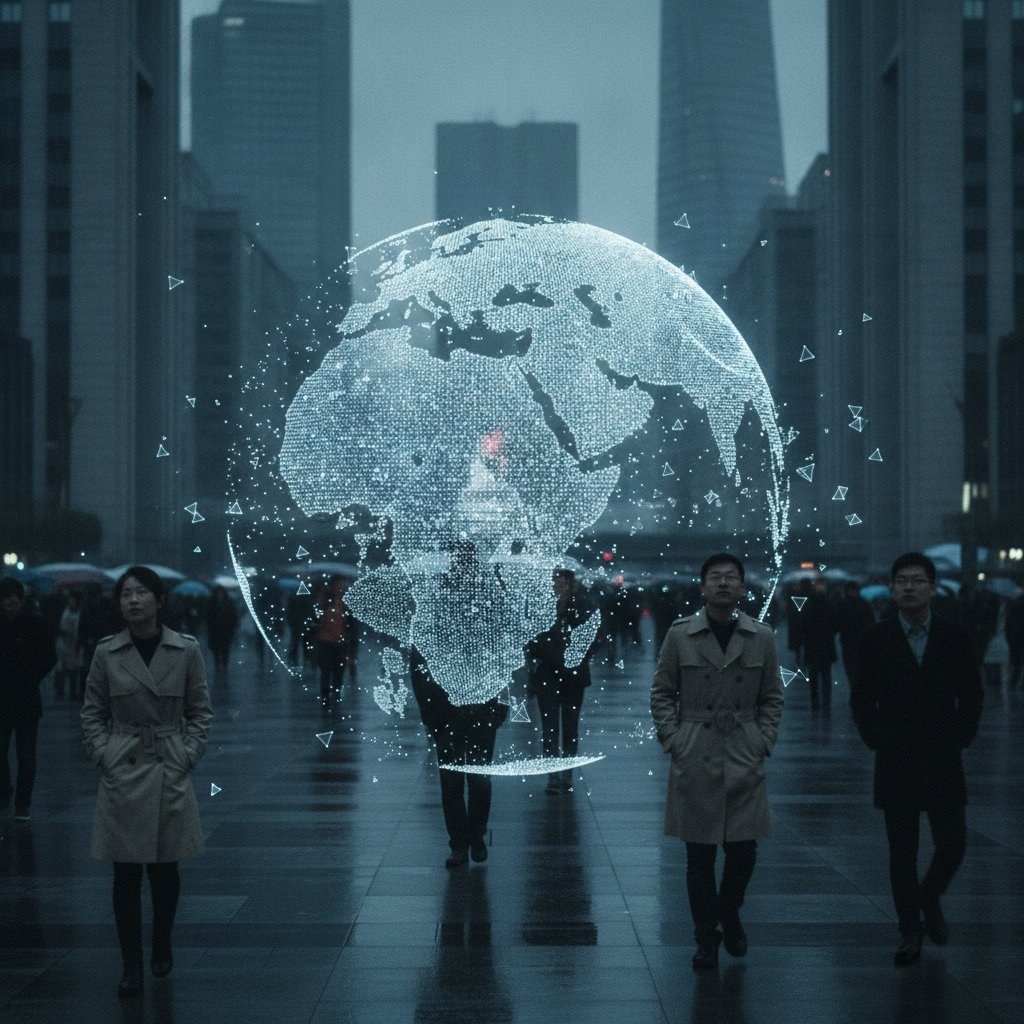
The term "World Model" has officially devolved into a marketing buzzword that obscures more than it explains. While the industry eagerly slaps this label on every advanced video generator, the Physical Intelligence team at the Shanghai AI Lab is pushing to steer the conversation back toward scientific rigor. According to their definition, a true World Model is not a pixel generator but an internal simulator capable of calculating the underlying structure and dynamics of an environment.
The gap between "beautiful rendering" and "understanding physics" is fundamental. As the researchers highlight in their report, physical intelligence requires a system that can predict the consequences of specific actions and pre-calculate optimal strategies. This eliminates the need for the endless, slow process of trial and error in the real world. In essence, the Shanghai Lab proposes an architecture locked into an "agent-environment" loop with clearly defined roles: renderers handle visualization, simulators manage state transitions, and planners generate actions.
Three Pillars of Real Embodied Intelligence
Renderers: Translate latent states into human-readable pixels. Simulators: Mathematically predict how the world changes after an intervention. Planners: Select a trajectory based on these predictions.
The problem with most current solutions is that they are trapped in a state of "digital hallucination." Without an understanding of physical laws, AI remains merely a statistical predictor of the next token. Shanghai AI Lab’s roadmap suggests a transition toward unified multimodal world models and foundation-scale interactive simulators. This shift would enable the concept of "Chain-of-Imagination"—a reasoning process where the AI plays out hypothetical scenarios in its "mind" to solve complex tasks.
For CTOs and R&D leaders, this report serves as a reality check: the visual fidelity of a video does not equal physical logic.
If your strategy relies on models that lack counterfactual thinking or fail to grasp the causal link between an action and a state change, you are building a facade on sand. The next stage of the arms race isn't about scaling parameters; it's about integrating physical constraints into latent space. The future belongs to models that don't just look realistic but can function within Earth's gravity, rather than in the vacuum of a developer's imagination.