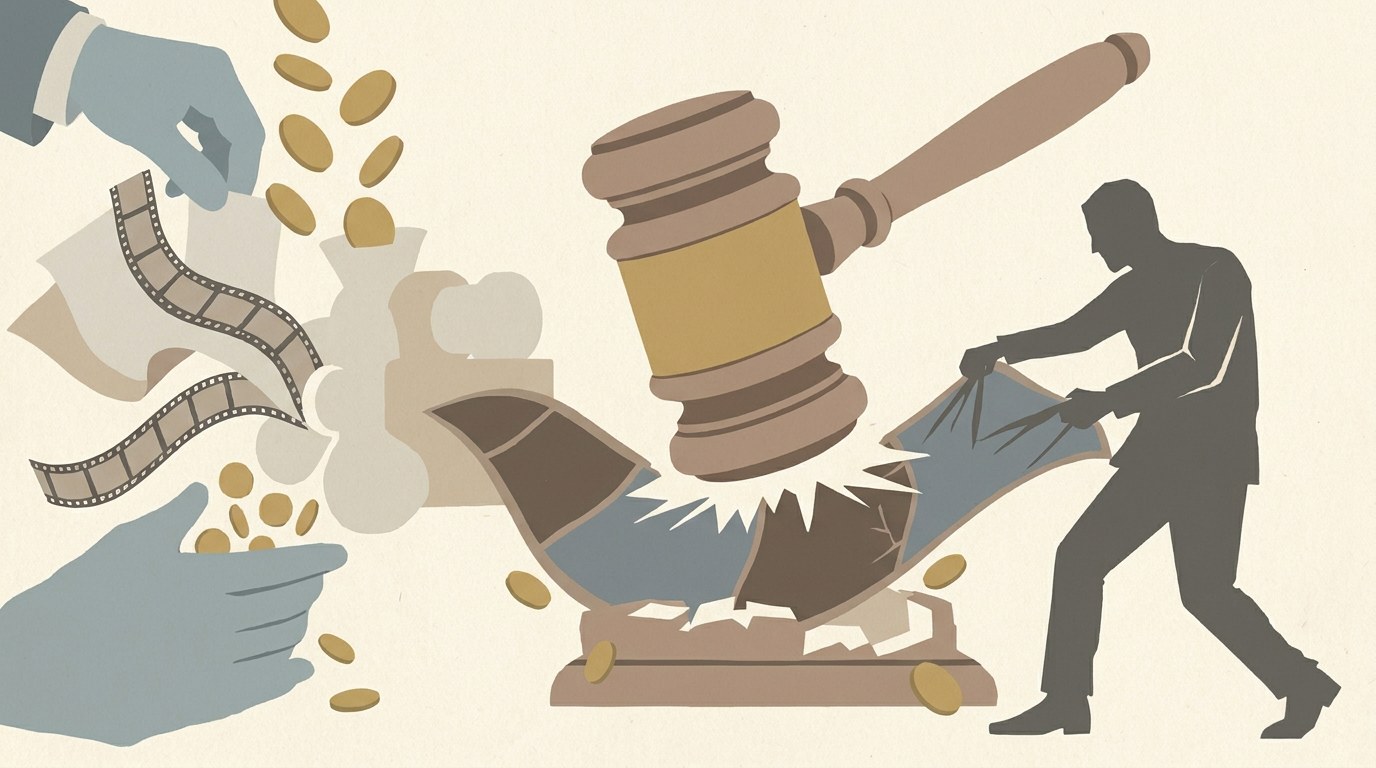
A court in Wuhan has officially turned compute costs into hard legal leverage, factoring token consumption and API licensing fees directly into a copyright damages calculation for the first time, as the National Law Review reports. The court ordered a defendant to hand over 20,000 RMB—roughly $2,900—after a competitor flagrantly ripped off an AI-generated short drama.
The dispute revolved around a one-hour short drama produced in early 2026 using various AI tools and published across platforms like WeChat. Within twenty-four hours of release, a rival operation copied the entire production, slapped a new title on it, and monetized the stolen work with in-stream ads. The Wuhan court had little patience for the copycats, classifying the drama as a fully protectable audiovisual work after determining that human creators steered every creative phase, from the initial scriptwriting and prompt engineering to output curation and final assembly.
This ruling dramatically expands China's aggressive legal scaffolding for machine-assisted content, following a 2023 Beijing precedent that recognized copyright in AI-generated images. Crucially, the Wuhan bench did not just look at traditional metrics like runtime, distribution reach, and infringement duration; it explicitly weighed AI-specific compute expenditures as concrete financial harm. To back this up, the court strongly advised creators to hold onto rigorous project logs, raw scripts, and prompt drafts if they want to survive future courtroom showdowns over human authorship.
Operational compute bills and software licenses are no longer invisible overhead buried in corporate accounting. API invoices now stand as legitimate, court-approved baseline evidence for intellectual property theft, meaning your infrastructure spend just became your primary legal shield.