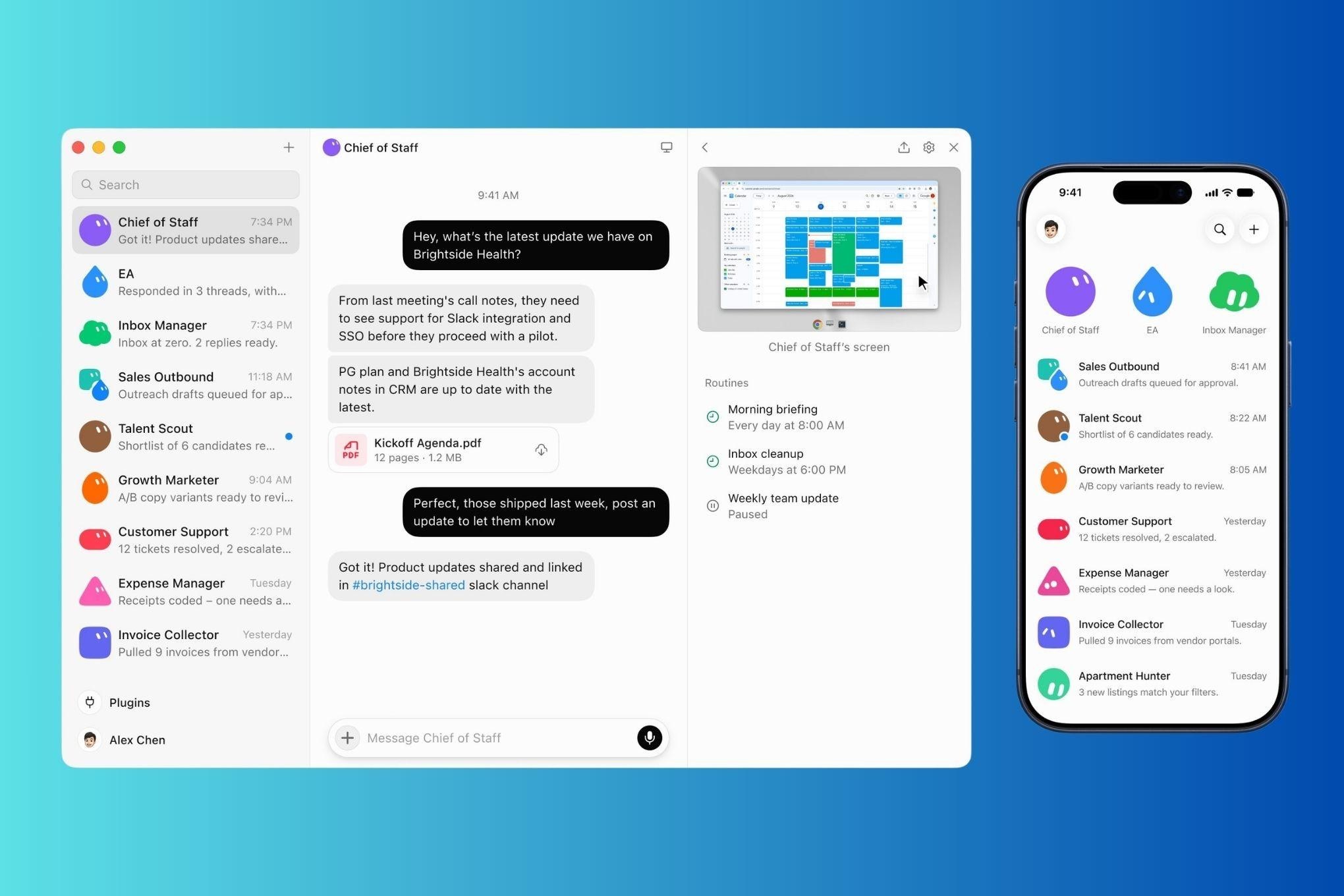
The era of the conversational chatbot is ceding ground to autonomous agency. Elon Musk’s xAI has introduced Grok Bot, an always-on service designed to function as an independent digital teammate capable of executing multi-step workplace tasks. Unlike traditional Large Language Models that passively wait for prompts, these agents operate within dedicated, persistent cloud environments. This infrastructure allows them to sign into enterprise apps, tools, and websites to complete work autonomously, returning to the user only when the job is done or a specific approval is required. By shifting the focus from text generation to interface management, xAI is positioning Grok as a functional replacement for linear operational roles rather than a mere search tool.
The Architecture of Autonomous Operations
xAI is entering a crowded market, directly challenging OpenAI’s ChatGPT Work and Anthropic’s Claude. However, the differentiator for Grok Bot lies in its independent computer environment, which enables a level of persistence that mobile-first wrappers lack. According to project leads at xAI, the bot evolved from internal prototypes used to handle sales outreach, marketing, and bug fixes. Users can message these bots like colleagues from any device without pre-configuring complex routines. The system allows multiple bots to run in parallel, with a 'manager' agent designated to coordinate specialized tasks across the team.
The bots can independently message each other to share context when projects overlap and coordinate work in group chats to assign ownership on their own.
This inter-agent communication allows the system to scale beyond simple query-response cycles into a self-managing workforce. xAI claims the bots learn and save existing workflows, retaining the user's personal voice and proactively picking up tasks before they are even requested. For business leaders, the immediate takeaway is that 'always-on' architecture is now more critical than benchmark scores. Grok Bot is built to follow up on dropped conversations and old chats, significantly reducing the cognitive load on managers who currently lose hours to context-switching.
Infrastructure Over Model Quality
The service is currently in beta for SuperGrok Heavy and Cursor Teams subscribers, signaling a move toward a 'teammate' model where AI agents hold the right to act within corporate accounts rather than just drafting emails. Security and control remain the primary friction points as these agents gain the authority to sign into internal tools. xAI’s decision to house these agents in a shared cloud-based environment provides a necessary sandbox for this level of autonomy, but the risks are non-trivial.
This transition from AI-as-a-tool to AI-as-a-colleague is no longer a theoretical roadmap; it is a live beta test in corporate operations. We are seeing a pivot from software that helps you work to software that works instead of you. The infrastructure is finally catching up to the ambition, shifting the burden of potential error from the prompt-writer to the system architect. In this new hierarchy, the value isn't in how well the model speaks, but in how safely it navigates the company’s internal interfaces without supervision.