AI · This text was generated with artificial intelligence
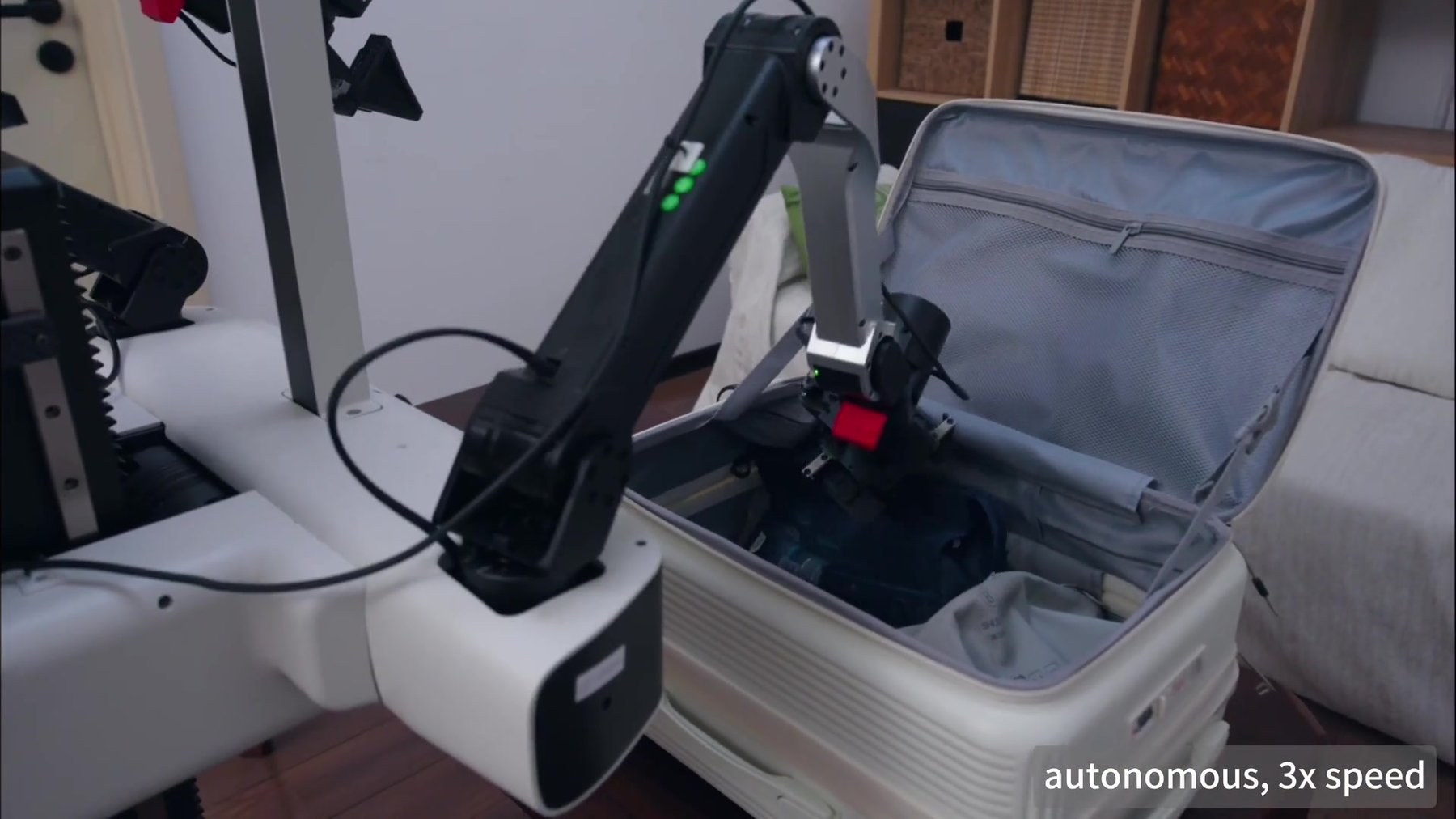
The Xiaomi-Robotics-1 demonstration makes one thing clear: scaling laws in robotics don't mirror those of text models. While we have grown accustomed to chasing parameter counts in LLMs, the critical resource in the physical world has shifted to the volume of motor experience. According to the developers' report, increasing the training dataset caused the robot's success rate in unfamiliar environments to jump from a lackluster 25% to a confident 75%—and a plateau is nowhere in sight. It appears that the primary bottleneck for autonomous systems is no longer a lack of raw computing power; everything now hinges on the scarcity of high-quality movement scenarios.
Hacking Data Collection
To bypass the data shortage, Xiaomi opted not to spend years on expensive teleoperation of actual robots. Instead, engineers equipped themselves with portable handheld grippers and cameras, recording over 100,000 hours of footage in ordinary kitchens, shops, and workshops. They solved the labeling problem for this massive dataset with an elegant twist: they deployed a secondary AI model that segmented and described the movements in just two weeks. This represents a significant precedent—rather than waiting for an architectural "breakthrough," the company simply hacked the data collection process.
Key Business Takeaways
This approach enabled Xiaomi-Robotics-1 to deliver the best results to date on standard robotics benchmarks. For businesses, the signal is clear:
Investing in alternative data collection methods pays off faster than leasing high-end hardware. Diversity in physical recordings now carries much more weight than the parameter count in a spec sheet. Autonomous success depends on the richness of a neural network's "lived experience," not its size.
If you are implementing robotics, it is time to pivot your strategy: invest in handheld grippers or synthetic environments rather than redundant computing power.