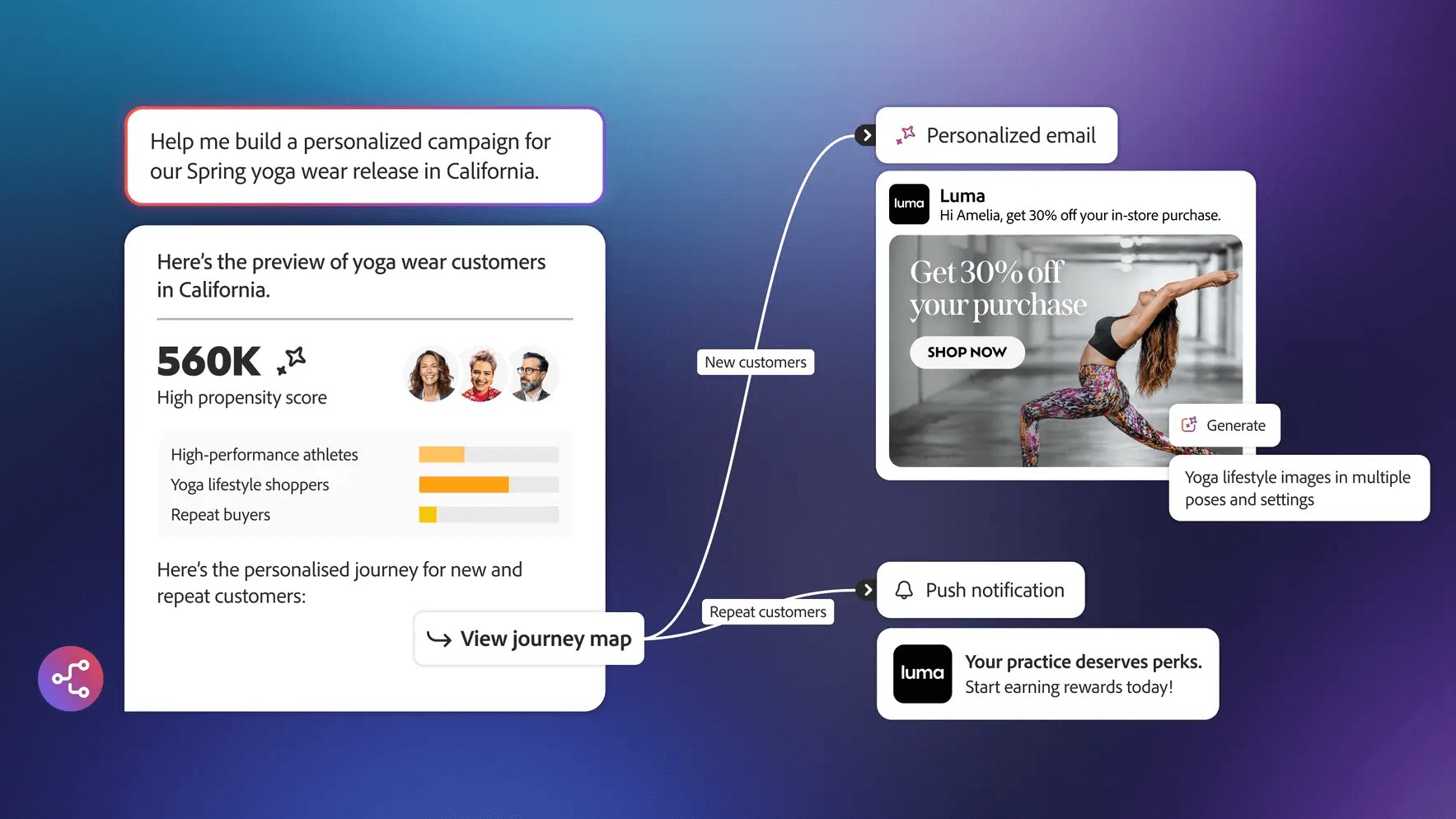
Adobe is making a move to transform from a provider of "brushes" into an operator of autonomous agents. At a conference in Las Vegas, the company unveiled its CX Enterprise platform — a response to a 30 percent drop in its stock and pressure from AI-native players like OpenAI and Anthropic. As Shantanu Narayen acknowledged in an interview with the WSJ, business models are changing under the pressure of AI-first applications. The central element of this defense is the "CX Enterprise Coworker." This is an agent designed to automate marketing and sales, coordinating work across a network of more than 30 partners, including Microsoft, Nvidia, and Amazon. Adobe is attempting to maintain control over corporate marketing budgets before competitors like Canva or Claude Design erode its market share.
A critical element of the strategy is the "brand visibility" layer. Adobe positions it as infrastructure designed to ensure that a brand remains visible in a world shaped by AI agents. This transformation is complicated by a leadership change: after 18 years at the helm, Shantanu Narayen is stepping down as CEO to serve as chairman of the board. The company must pivot while aggressive startups, unburdened by legacy licensing models, are close behind.
Adobe is betting that marketing departments will prefer to trust a familiar ecosystem rather than a variety of specialized startups. By integrating models from OpenAI and Anthropic into its workflows, Adobe is responding to the fact that its in-house Firefly models face significant competition. For the enterprise customer, this represents a paradigm shift: you are no longer just buying software, but hiring a digital workforce managed by Adobe. This is a centralized control point intended to protect a brand from being obscured by the very AI models with which Adobe is now partnering.