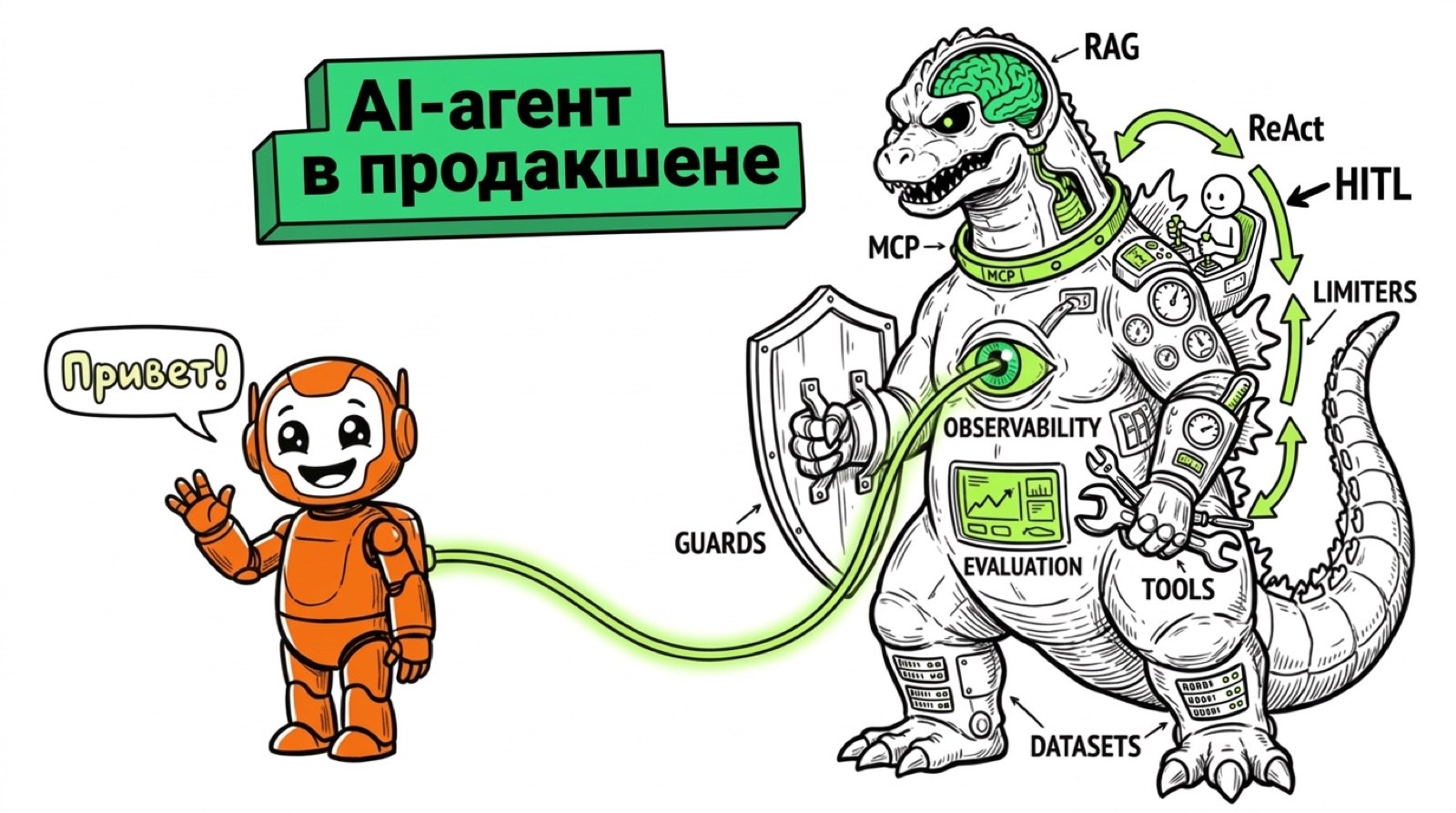
Moving an AI agent from prototype to production readiness is less about Large Language Models (LLMs) and Retrieval-Augmented Generation (RAG), and more about solid engineering. Beneath the friendly facade of a chatbot lies a complex mechanism encompassing observability, process management, and data security. Without these foundational elements, an AI agent remains an expensive novelty rather than a genuine revenue-generating tool. Companies that grasp this reality are no longer chasing trends but are focused on building reliable systems around their models. For a CEO, this signifies that AI is not magic but an investment in complex infrastructure where reliability and predictability are paramount, far outweighing fashionable patterns. Your AI consultant, meeting scheduler, or any other AI system is merely the visible tip of the iceberg. The core of the operation rests on architecture, security, and monitoring. Therefore, if you believe hiring an LLM specialist is the entirety of what's needed, prepare for the stark reality: you will need to construct a fully functional, error-resilient system. This transition requires a shift in perspective from merely developing models to architecting dependable AI-powered solutions. The underlying engineering ensures that AI agents can be trusted to perform consistently and securely in real-world business scenarios. Ignoring these engineering imperatives risks creating AI systems that are fragile, unpredictable, and ultimately, a poor return on investment. Focusing on observability allows for proactive issue detection and resolution, while robust process management ensures agents operate efficiently. Data security is non-negotiable, safeguarding sensitive information and maintaining regulatory compliance. These are the critical engineering disciplines that elevate AI from experimental technology to a strategic business asset.
© The Value Engineering 2026
AI Agents: It's Not About LLMs, It's About Engineering
Unlock AI agent potential beyond LLMs & RAG. Focus on solid engineering: observability, process management, & data security for reliable, revenue-generating AI.
★
★
★
★
★