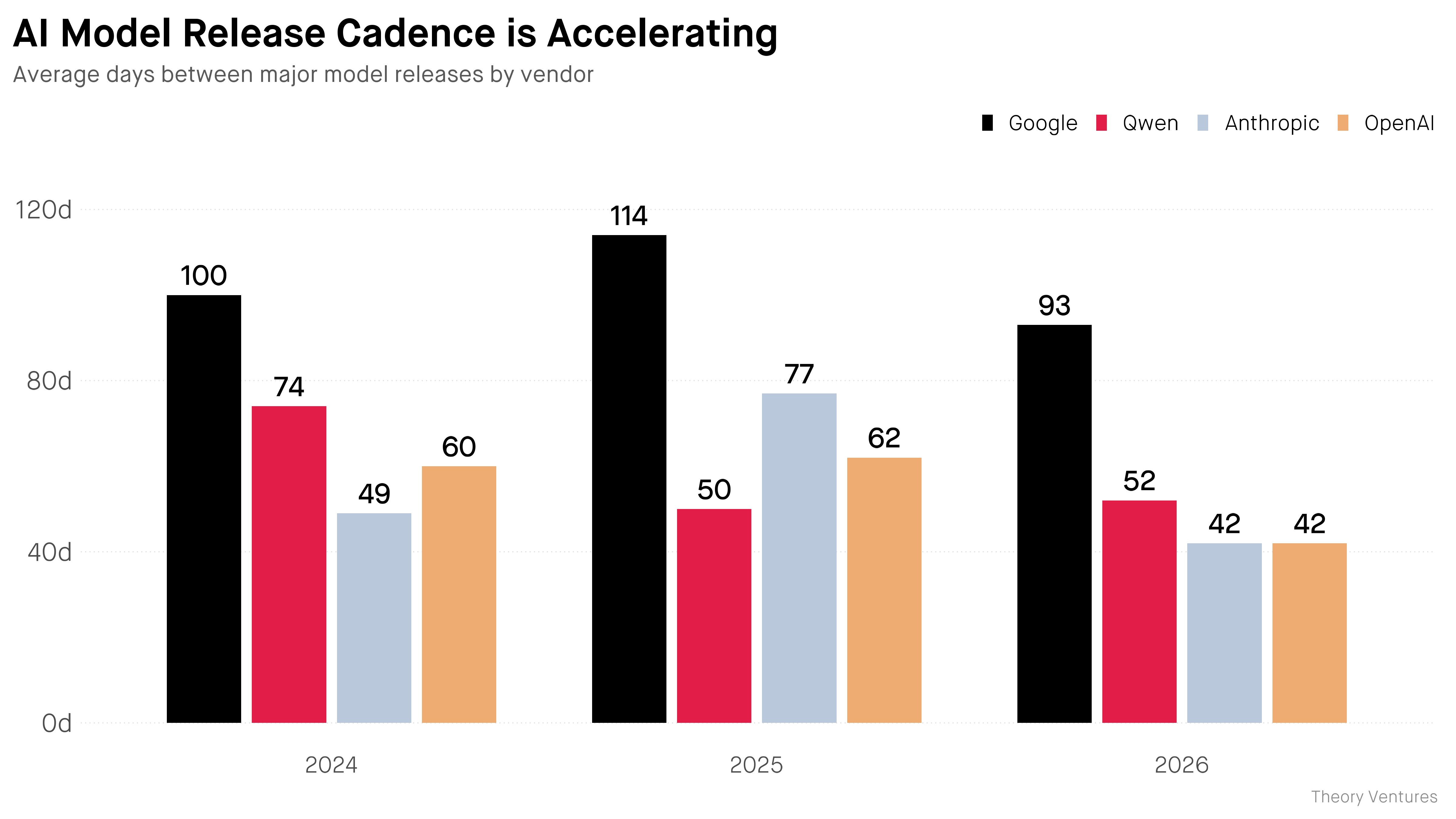
The SaaS era began with "unbundling," where individual services carved out specific niches, such as sales automation (Salesforce), chat (Slack), or file sharing (Dropbox). These specialized, "point" solutions dominated by honing a single workflow. However, AI is evolving faster than anticipated. With models changing every 42 days, it is simply not cost-effective for businesses to continually assemble a "best-in-class" tech stack from disparate tools.
AI providers are actively expanding their offerings, transforming into platforms. Harvey, initially focused on law firms, now positions itself as an AI for professional services broadly, incorporating tax solutions across over 25 jurisdictions in partnership with PwC. Glean, which started with enterprise data search, now offers vertical solutions for healthcare, finance, and the public sector, alongside specialized agents for sales, HR, and engineering. ElevenLabs, having begun with speech synthesis, now provides voice agents for customer service, music generation, and audiobooks.
Even giants like OpenAI and Anthropic are launching vertical solutions for specific industries, establishing dedicated sales departments. They are shifting from selling APIs to becoming platforms. This strategy reflects an understanding that the narrow specialization that drove progress in SaaS is being supplanted by breadth of coverage in AI. Companies are offering not just features, but trust and long-term partnerships, thereby reducing cognitive load for their clients.
This shift signifies a paradigm change in procurement for CEOs. The time has come to evaluate comprehensive offerings and commit to long-term partnerships with providers capable of delivering stability in the rapidly evolving AI landscape, rather than attempting to construct an ideal but fragile stack of disconnected tools.
For you as a business leader, this means a strategic re-evaluation of your AI vendor relationships. Instead of chasing the latest single-function AI tool, you should prioritize vendors who offer integrated platforms and demonstrate a commitment to sustained development and support. The agility that once favored a fragmented approach now demands consolidation around reliable, broad-spectrum AI partners who can adapt alongside your business, mitigating the risks associated with rapid technological obsolescence.