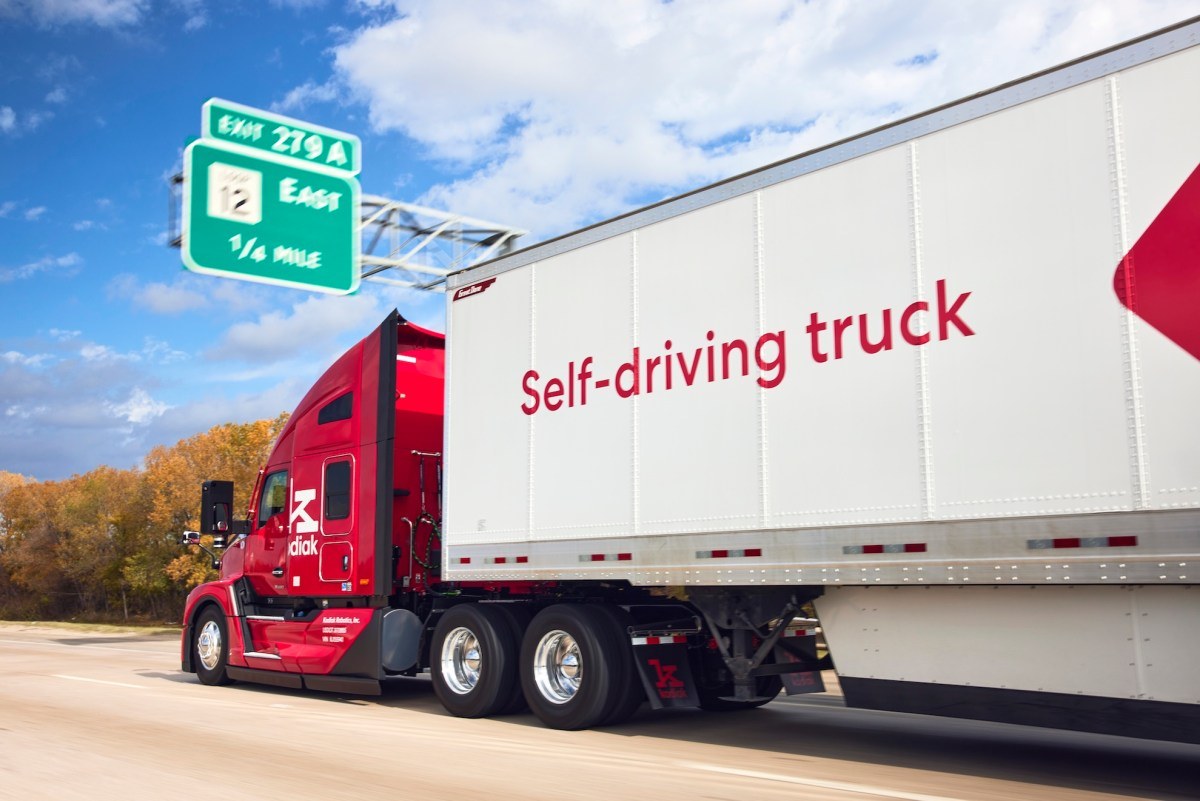
California has finally dismantled its long-standing embargo on autonomous heavy freight. Under revised rules approved by the California Department of Motor Vehicles, autonomous commercial vehicles exceeding 10,000 pounds (roughly 4.5 metric tons) are permitted to test and build toward commercial deployment on state thoroughfares. Aurora Innovation and Kodiak AI secured the inaugural permits under this revised framework, immediately beginning the validation of their autonomous stacks on public corridors. Kodiak has initiated live runs with an initial fleet focused around its Mountain View headquarters.
The regulatory pathway lays down rigid operational guardrails. The California DMV mandates strict compliance across functional safety protocols, liability coverage, teleoperation readiness, and safety driver vetting. Under active testing permits, a licensed safety driver must occupy the cab at all times. Furthermore, testing remains strictly prohibited on surface streets with speed limits of 25 mph or lower, barring explicit transit segments between designated freight hubs and operational arteries.
Expansion From the Texas Testing Grounds
For both Aurora and Kodiak, the regulatory thaw marks a strategic repatriation. While both autonomous developers maintain their corporate and engineering headquarters in California, the state's prior weight cap forced them to incubate and scale their highway freight networks in Texas and the Southwest.
"Those rules, approved April 28, lifted a ban on driverless vehicles weighing over 10,000 pounds from testing on public roads and provided a regulatory path for companies to test, and eventually deploy, autonomous heavy-duty vehicles."
Aurora initiated commercial-scale pilots in Texas along the Dallas–Houston lane, subsequently extending operations across transcontinental corridors linking Fort Worth, El Paso, and Phoenix, alongside cross-border logistics lanes between Laredo and Dallas. Kodiak similarly validated its software stack in Permian Basin industrial haulage before scaling long-haul runs between Dallas and Houston. Unlocking California bridges the crucial West Coast link, enabling these systems to target continuous asset utilization, mitigate structural driver shortages, and compress the operating cost per ton-mile across major transcontinental supply lines.
Union Pushback and Deployment Barriers
The commercial pivot faces immediate friction from labor and administrative oversight. The Teamsters union filed suit against the California DMV in Alameda County Superior Court, alleging the agency bypassed statutory mandates to evaluate labor disruption, workforce displaced freight economics, and general motorist risk profiles before repealing the cap.
While safety drivers remain legally tethered to the steering wheel and fully driverless commercial scale requires additional regulatory gates, the operational center of gravity has shifted. California's freight corridors are open, forcing autonomous freight from regional testing sandboxes into critical supply chain infrastructure.