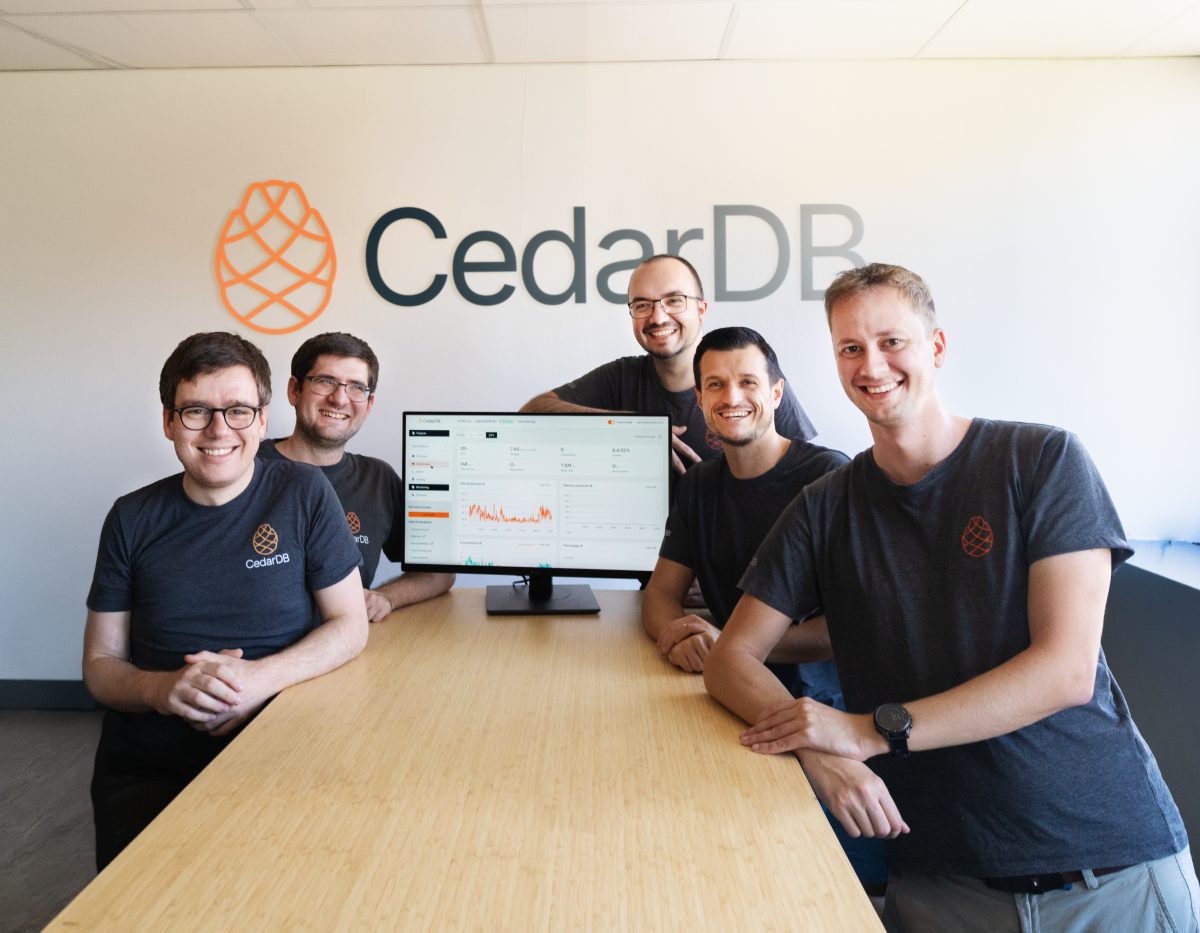
Corporate infrastructure faces a hidden financial drain as autonomous AI agents demand instant answers from natural language queries that traditional database separation was never built to support. For decades, enterprise technology stacks maintained a strict operational divide: analytical databases stored historical data to track trends, while transactional systems handled daily order records and payments. This architectural split now introduces severe latency and heavy costs as businesses deploy agents requiring simultaneous access to both environments. According to CedarDB co-founder and CEO Moritz Sichert, the Munich-based database engine CedarDB supports both analytical and operational queries to address the shifting demands of agentic AI.
CedarDB operates as a Technical University of Munich spinout based on Umbra, a research project built from scratch to beat legacy engines on processing speed by maximizing modern hardware capabilities. With five Umbra researchers as its co-founders, the startup designed its system to deliver faster performance without demanding additional CPUs, memory, or processing power from enterprise buyers. Maintaining separate OLTP (Online Transaction Processing) and OLAP (Online Analytical Processing) silos forces organizations into a double CAPEX bind: businesses must provision, license, and maintain distinct hardware clusters, duplicate data pipelines, and manage synchronization delays just to feed dual environments. The resulting OPEX inflates rapidly through continuous maintenance, complex ETL overhead, and manual tuning. By unifying transactional and analytical workloads onto a single engine, database architectures bypass these redundant data copies, slashing both the hardware footprint and the recurring operational drag that plagues legacy setups.
CedarDB was compatible with PostgreSQL, an open source database system.
This deliberate compatibility keeps migration costs low because corporate users avoid the expense of rebuilding existing applications. As Sichert noted, this database structure conveniently matches the exact logic that large language models absorb most frequently during their training phases. Large language models ingest vast corpuses of code, relational schemas, and structured database queries during training, effectively learning to reason over unified relational models rather than fragmented, partitioned data silos. When autonomous agents attempt to query split OLTP and OLAP architectures, they must generate complex, fragmented multi-step calls that mirror neither their training data nor efficient execution paths, whereas unified engines naturally align with the relational patterns burned into LLM weights during training.
Shifting Infrastructure Economics
The market economics of data management are forcing vendors to rethink how unified workloads operate under enterprise budgets. After spending a decade developing its core technology, the startup launched CedarDB Enterprise as an on-premise offering alongside its free version, CedarDB Community Edition, announced in May of last year at the same time as it announced a €5.3 million seed funding round approximately valued at $6 million. Following beta testing phases with waitlisted accounts, the company announced limited availability of CedarDB Cloud onstage at TechCrunch Disrupt.
Competitors are racing to capture the same architectural territory as enterprise IT budgets tighten around complex AI deployments. At its Data + AI Summit, American data major Databricks cited the agentic era as the primary driver behind launching LTAP, a new data architecture aiming to unify transactions, analytics, streaming, and operational data on a single copy of storage in the lake.
While Databricks targets large-scale lakehouse environments, CedarDB plans to serve its first cloud users with its current team of 14 people before scaling headcount after securing further market traction and subsequent funding rounds.
Will this unified storage approach eliminate the expensive latency of legacy enterprise stacks, or will migration friction preserve the dominance of separate database silos?