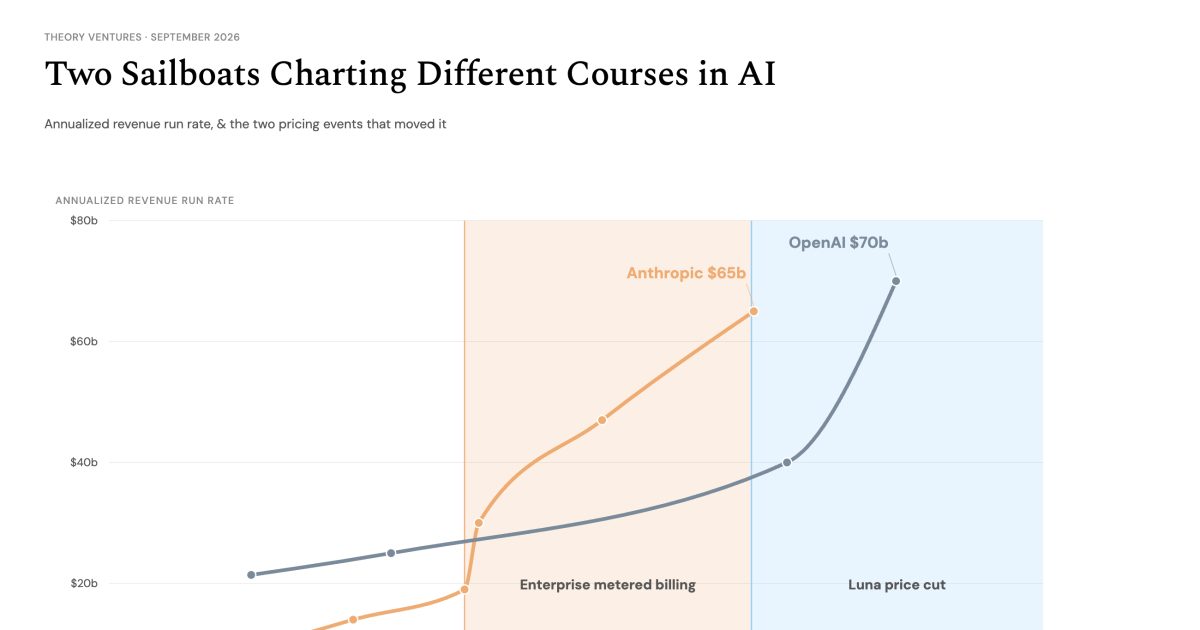
AI foundation models have effectively reached commodity status, upending the previous economic assumptions of the market. According to the data from Tomasz Tunguz, token usage has surged 50% since July while prices have fallen 41%. This divergence signals a fundamental shift in how enterprises purchase and deploy intelligence. Rather than treating models as proprietary assets, businesses are increasingly treating them as interchangeable utility inputs.
Market behavior reflects this structural change as buyers abandon high-cost options. Frontier models’ share of tokens slipped from 53% in August into the mid-40s as companies defaulted to smaller, cheaper tiers, per the figures from Tomasz Tunguz. Open source demand has shifted decisively from frontier-dominated to medium-and-small tiers. At the same time, spending among the top 1% of adopters fell 9.7% in August to $7,205 per employee per month, cooling from its July peak, as Tomasz Tunguz pointed out.
Frontier models’ share of tokens slipped from 53% in August into the mid-40s as companies defaulted to smaller, cheaper tiers.
This contraction in enterprise spending underscores a growing corporate skepticism toward paying premiums for marginal benchmark gains. Labs are forced to slash prices aggressively to maintain volume. OpenAI cut prices on Luna by more than 80% to win share, according to Tomasz Tunguz. Meanwhile, decision models like TypeSafe’s Jev are winning share of LLM calls at $0.04 per million input tokens, roughly 75x cheaper than standard LLMs for routing, gating, and classification, as noted by Tomasz Tunguz.
The New Moat: Distribution and Routing
As raw model margins compress toward zero, the competitive advantage shifts away from training the largest weights and toward controlling the interface. In the assessment of Tomasz Tunguz, winning share becomes the only game that matters when aggregate dollar spend cools while token volume compounds. Companies are adapting by aggregating multiple models under single platforms rather than relying on a single proprietary architecture.
Strategic partnerships and multi-model execution are rapidly replacing single-vendor lock-in. OpenAI announced a partnership with Baseten to resell open-weight models, as Tomasz Tunguz reported. Similarly, as Elon Musk commented, the Grok bot would use the best model to complete a task, not just proprietary models, according to Tomasz Tunguz. This approach allows platforms to capture routing data and build high-margin revenue streams by collecting a toll on products without bearing the cost to serve.
Controlling the user interface creates a compounding advantage through data collection and marketplace aggregation. OpenAI’s recent surge toward a ~$70b run rate highlights the dynamic where aggressive price cuts and marketplace aggregation allowed it to recapture share within a boat length of Anthropic, as Tomasz Tunguz observed. In a commoditizing market, financial returns accrue to the platform aggregating the volume, rendering raw model superiority secondary to distribution power.