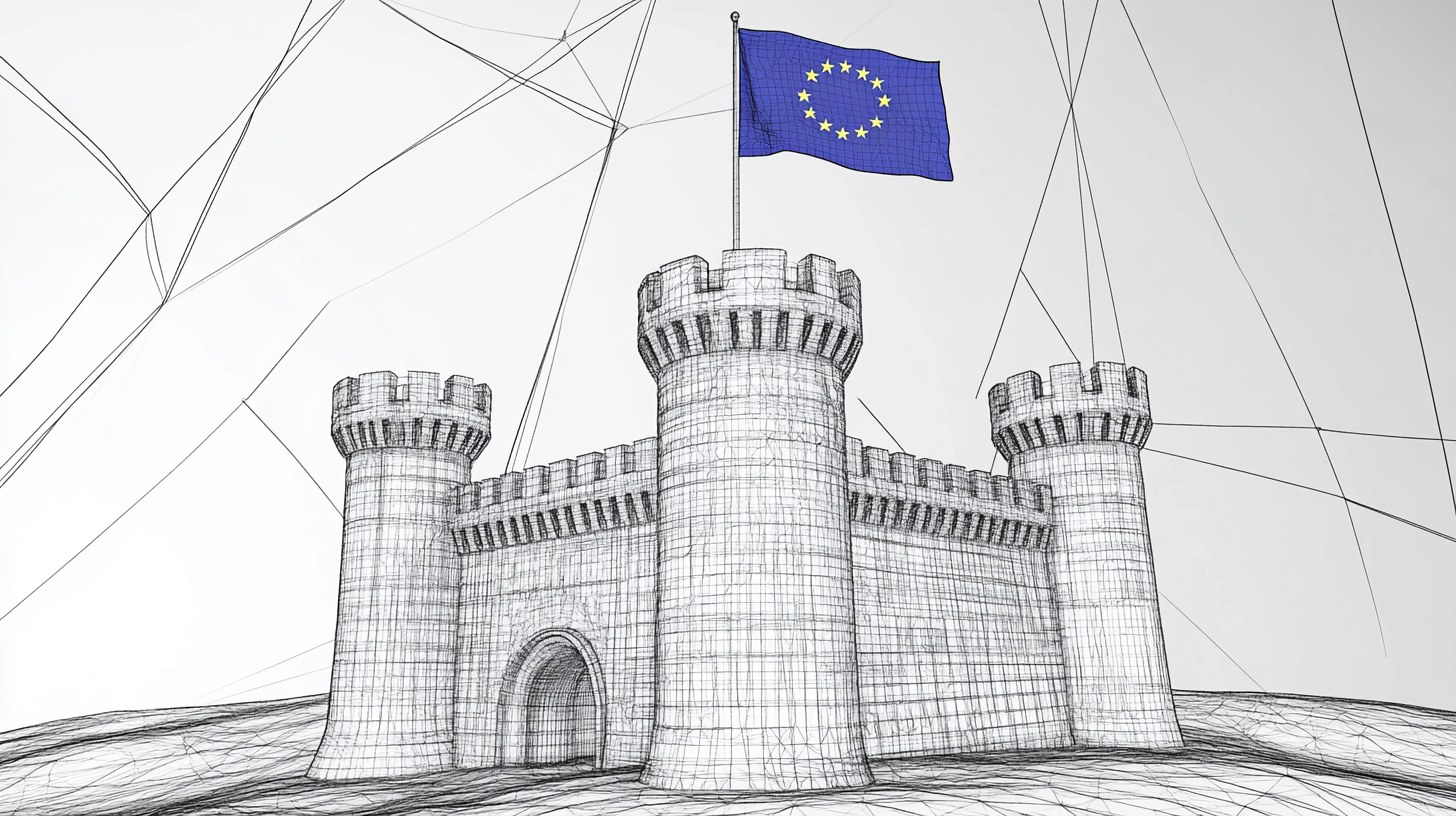
The European Commission, the European Parliament, and the Council of the EU have rolled out a ban on the use of AI-generated videos and images in official communications. The rationale? Citizens supposedly demand 'trust' and 'authenticity.' Under these new guidelines, neural networks are relegated to modest roles, such as enhancing or optimizing existing content. On the surface, it looks like a defensive crouch against deepfake anxiety, even as the rest of the world aggressively adopts these tools for speed and efficiency.
Ironically, the very politicians this decision aims to protect are already well-acquainted with AI content. Donald Trump, for instance, rode the wave of 'authenticity' by releasing 36 AI-generated posters, including one depicting himself as the Pope. Apparently, Brussels believes the rules of the game are different for American politicians. Yet, things aren't much better within the EU itself: German politician Friedrich Merz released a video of a dancing version of himself—ostensibly to warn about the risks of AI—while Hungarian Prime Minister Viktor Orbán has shown no hesitation in using deepfakes to criticize Brussels. The AI content that the EU fears so much is already being used by these same politicians as an invisible but potent tool for shaping public opinion.
Experts view the EU's ban not just as a missed opportunity, but as blatant hypocrisy. 'Responsible use is better than total abstinence,' notes Walter Pasquarelli, an advisor to the OECD. In his view, the European Union could have become a global model for transparent and responsible AI implementation rather than driving the technology underground. Alexandru Voica of Synthesia adds that speed of reaction is everything, especially amidst geopolitical storms. Furthermore, under its own AI Act, the EU could have socialized citizens to labeled synthetic content—mandating watermarks and clear disclosures—rather than opting for a flat ban.
The EU's decision, while declaring a pursuit of 'authenticity,' effectively results in a rejection of cutting-edge tools while global competitors embrace them. Instead of leading in transparent AI application, the Union has chosen a path of simulated control that risks devolving into protectionism. Those who hide behind 'authenticity' risk becoming mere spectators in the race for AI profitability, while more agile competitors capture new markets and optimize costs. For businesses—especially those tied to the public sector or corporate communications—the message is clear: it is time to develop robust internal AI policies. Otherwise, you risk being left in the digital dust, watching competitors scale at speed while you search for loopholes in the latest 'règlement'.