Prompt lookup decoding has long promised a lightweight route to speculative decoding across inference engines like llama.cpp and vllm, alongside libraries like Hugging Face's transformers. Instead of relying on a secondary neural network to generate draft tokens—an architecture that usually introduces its own overhead and setup headaches—prompt lookup decoding deploys an n-gram model that inspects token history and selects candidates based on observed frequencies. It is an algorithmic shortcut that bypasses the need for bloated draft models entirely.
Algorithmic Optimizations in Token Drafting
These adjustments draw heavily on foundational algorithms developed by Daniel Lemire and Martin Ankerl, turning what was once a neat academic trick into a production-grade acceleration engine. As Martin Ankerl noted regarding the implementation:
"Daniel Lemire sent in a PR that makes prompt lookup drafting upto 4.2x faster on top of my original optimizations."
The Architecture of Multi-Tier N-Gram Caching
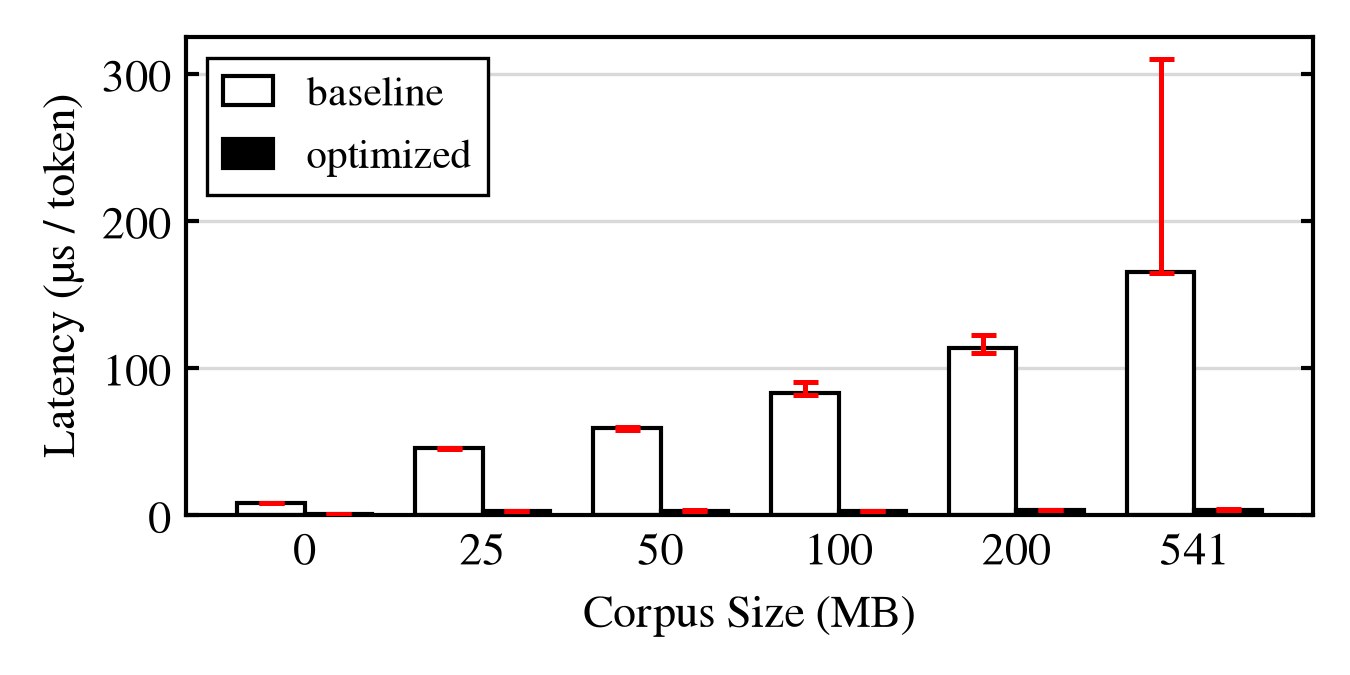
The drafting system in llama.cpp achieves its staggering performance gains—reaching up to 42x out of the box and scaling to 140x with subsequent pull requests—through a rigid three-tier caching structure. The context cache tracks n-grams ranging from size 1 to 4 for tokens currently processed by the model, while the dynamic cache logs n-gram frequencies across previous runs. Finally, a static cache holds n-grams of size 2 derived from a static text corpus built via the llama-lookup-create utility.
Performance evaluation relies on the llama-lookup-stats utility, which reads a text file and treats its token sequence as model output to benchmark speculative drafting behavior under load. By stripping out complex secondary drafting architectures in favor of streamlined n-gram tracking, these optimizations slash both latency and memory footprints by a factor of 2.6x on local hardware. For engineering teams, this is not a minor benchmark tweak; it is the line that moves heavy local model inference from an expensive, impractical experiment to a viable, high-performance alternative to cloud APIs.