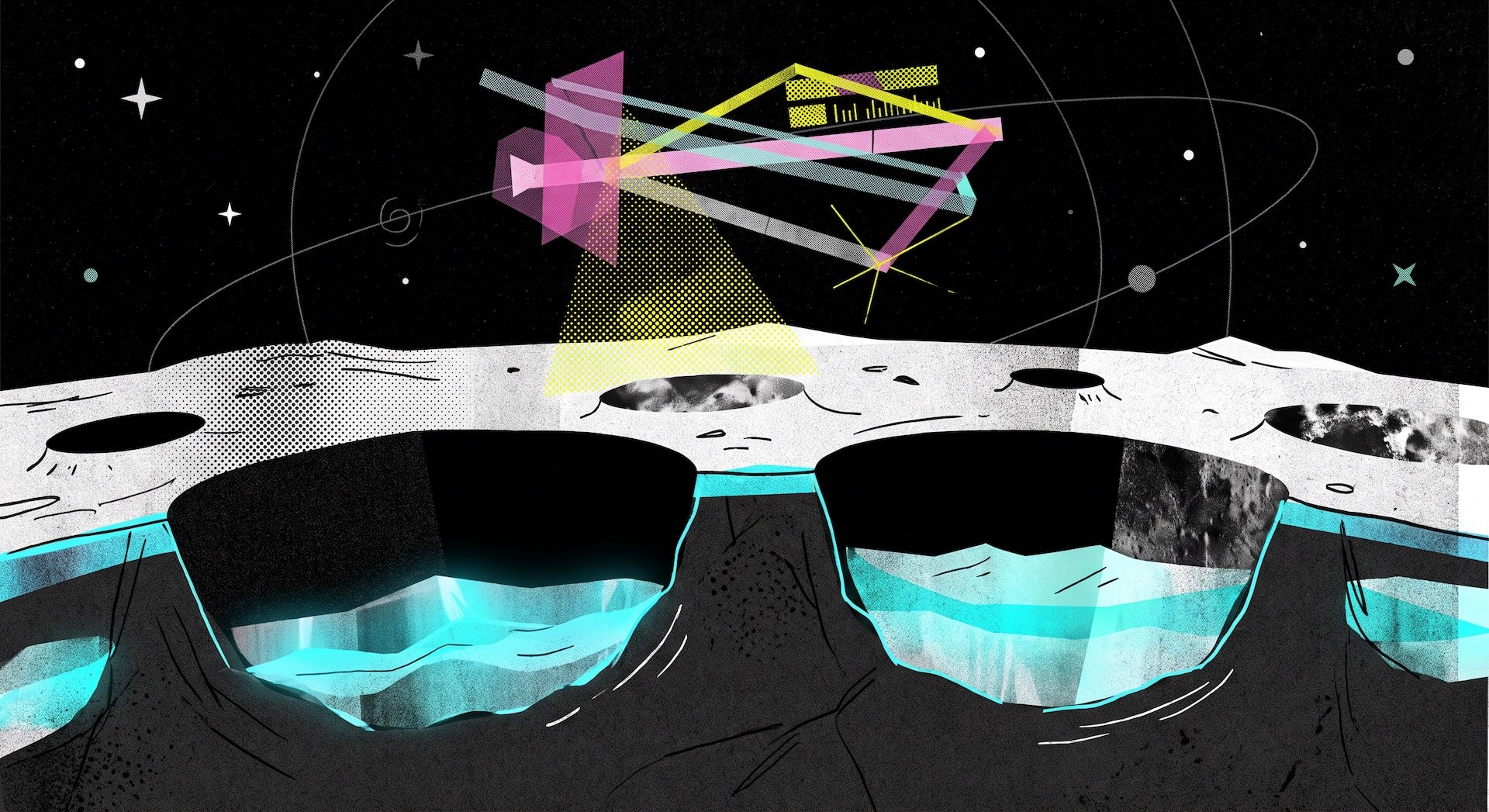
Decades of planetary exploration have left us drowning in raw space data, while turning those multi-terabyte digital archives into actionable tools for automated analysis remains an expensive bottleneck. To fix this structural inefficiency, NASA and IBM Research, alongside a squad of academic partners, have rolled out the NASA-IBM Lunar Foundation Model—a rare open-source bet on lunar science.
As Kevin Murphy, NASA's chief science data officer, explained:
"NASA has spent decades building an extraordinary scientific record of the Moon, but collecting data is only part of the job."
He added that making this mountain of data actually usable for scientists is long overdue. Pretrained on massive sets of unlabeled orbital observations, this foundation model lets researchers adapt the system to downstream tasks using only a handful of labeled examples. That neatly bypasses the industry's perennial headache: an abundance of raw lunar imagery paired with a severe scarcity of manual annotations.
Unifying Seventeen Years of Orbital Data
To build this infrastructure, the engineering team trained the architecture from scratch on SomBench, which the researchers pitch as the largest co-registered multimodal lunar corpus to date. The dataset crams nearly 2 million tile bundles across 11 modalities and two spatial scales into a single digestible format. Roughly 1 million high-resolution images stem from the Narrow Angle Camera at a crisp 1 meter per pixel, paired with nearly 964,000 multispectral images from the Wide Angle Camera at 100 meters per pixel. The core of this digital foundation rests on 17 years of continuous observations collected by the Lunar Reconnaissance Orbiter.
For commercial aerospace startups, this model changes the economics of lunar exploration entirely. Instead of spending millions building custom data pipelines to process raw orbital feeds, smaller players can now piggyback on a standardized spatial corpus to pinpoint water ice deposits on the poles and map treacherous crater topology with zero friction. It turns 17 years of institutional bureaucracy into an open commercial playground.