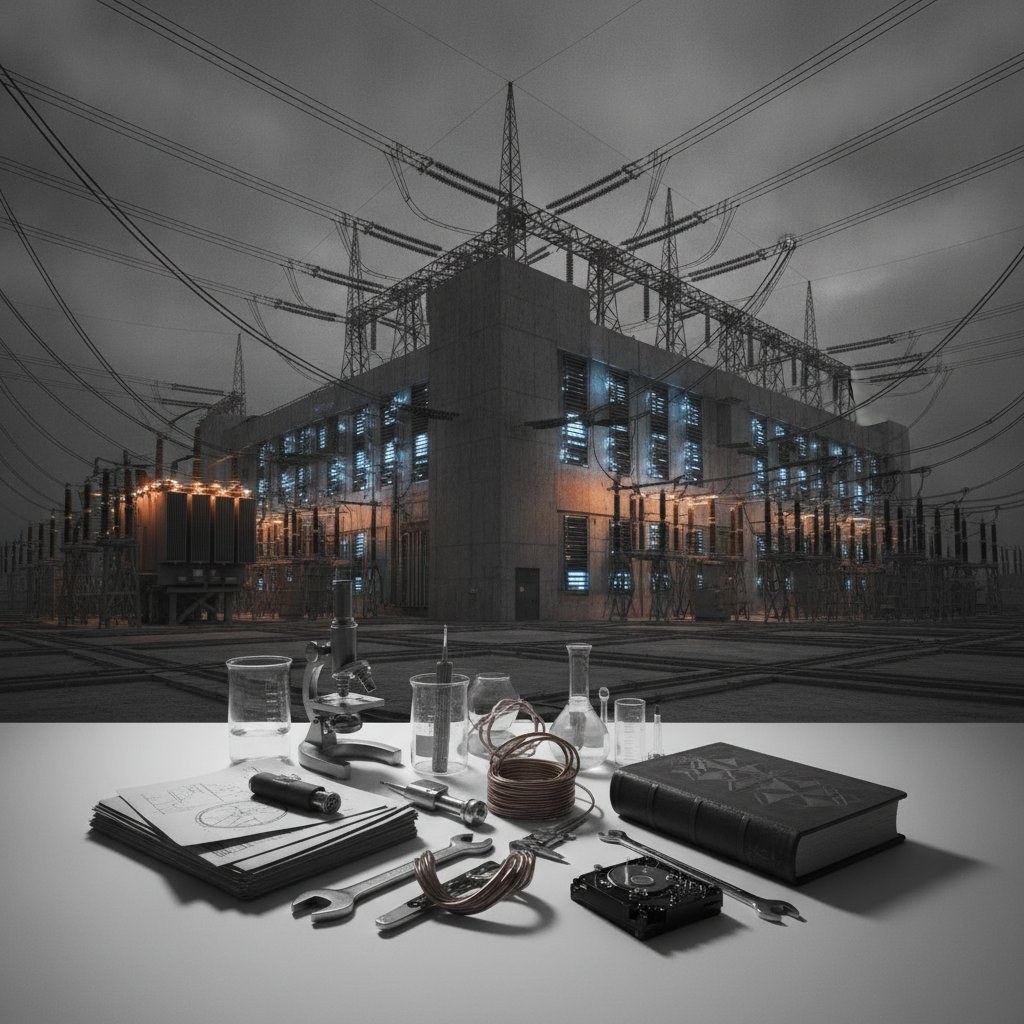
Capital requirements for frontier artificial intelligence are morphing into an aggressive financial loop that tests both corporate balance sheets and the physical limits of power grids. In an unprecedented move to guarantee computational capacity, ChatGPT developer OpenAI has signed a 20-year lease for a massive computing hub in Ohio, underwritten by a staggering $105 billion financing backstop from Nvidia, according to regulatory filings released Monday.
Vendor Financing and Hardware Lock-In
The transaction represents vendor financing on an industrial scale: Nvidia is essentially backstopping the balance sheet of its largest customer to ensure OpenAI continues buying Nvidia silicon. By underwriting the $105 billion lease obligation, the chipmaker manufactures its own future revenue stream while cementing hard hardware lock-in across the AI ecosystem for the next two decades.
Alongside the backstop, Nvidia disclosed a $1.5 billion direct investment into SB Energy, the SoftBank subsidiary managing the site, while actively defending against investor skepticism regarding circular financing mechanisms that threaten to inflate an AI infrastructure bubble. In an official statement, Nvidia dismissed systemic risk concerns:
"OpenAI will pay the lease," Nvidia wrote in a blog post Monday, adding that the deal was made with "the same discipline we apply to supply-chain management."
Yet public markets remain skeptical of this circular balance-sheet architecture. When early reports from The Wall Street Journal and Bloomberg suggested Nvidia was exploring backstops up to $250 billion in July, its stock dropped 5%, though shares have since rallied over 19% year-to-date.
8-Gigawatt Scaling on a Cold War Site
The physical plant will occupy the footprint of a decommissioned Cold War-era uranium enrichment plant in Piketon, Ohio. The deployment plans call for an initial 4.25 GW capacity with expansion rights up to 8 GW—an operational load that dwarfs conventional infrastructure. For perspective, a commercial nuclear reactor generates approximately 1 GW, and the entire municipality of San Francisco consumed just over 5 GW in 2024.
Because regional grids cannot absorb an 8 GW industrial load without collapsing, SoftBank and SB Energy are forced to build out 10 GW of dedicated generation capacity, committing more than $4 billion to local energy production. This site also represents a concrete execution phase of the broader $500 billion infrastructure blueprint previously outlined by OpenAI, Nvidia, SoftBank, and Oracle.
Local Impact and Infrastructure Economics
The immense power pull comes amid heightened community pushback against data center proliferation. Gallup polling indicates over 70% of Americans oppose data center construction near residential areas amid rising utility bills. To neutralize political friction in Ohio, OpenAI and SB Energy pledged to absorb all grid expansion costs, while OpenAI added a $40 million community investment fund, projecting 35,000 construction jobs and 2,500 permanent operational roles.
OpenAI CEO Sam Altman frames the Ohio buildout as foundational compute for emerging generative workloads. However, as classical algorithmic scaling hits diminishing returns, committing to two decades of fixed megawatt obligations against speculative enterprise software revenues leaves OpenAI—and Nvidia's circular guarantee—vulnerable if inference monetization fails to match this unprecedented capital intensity.