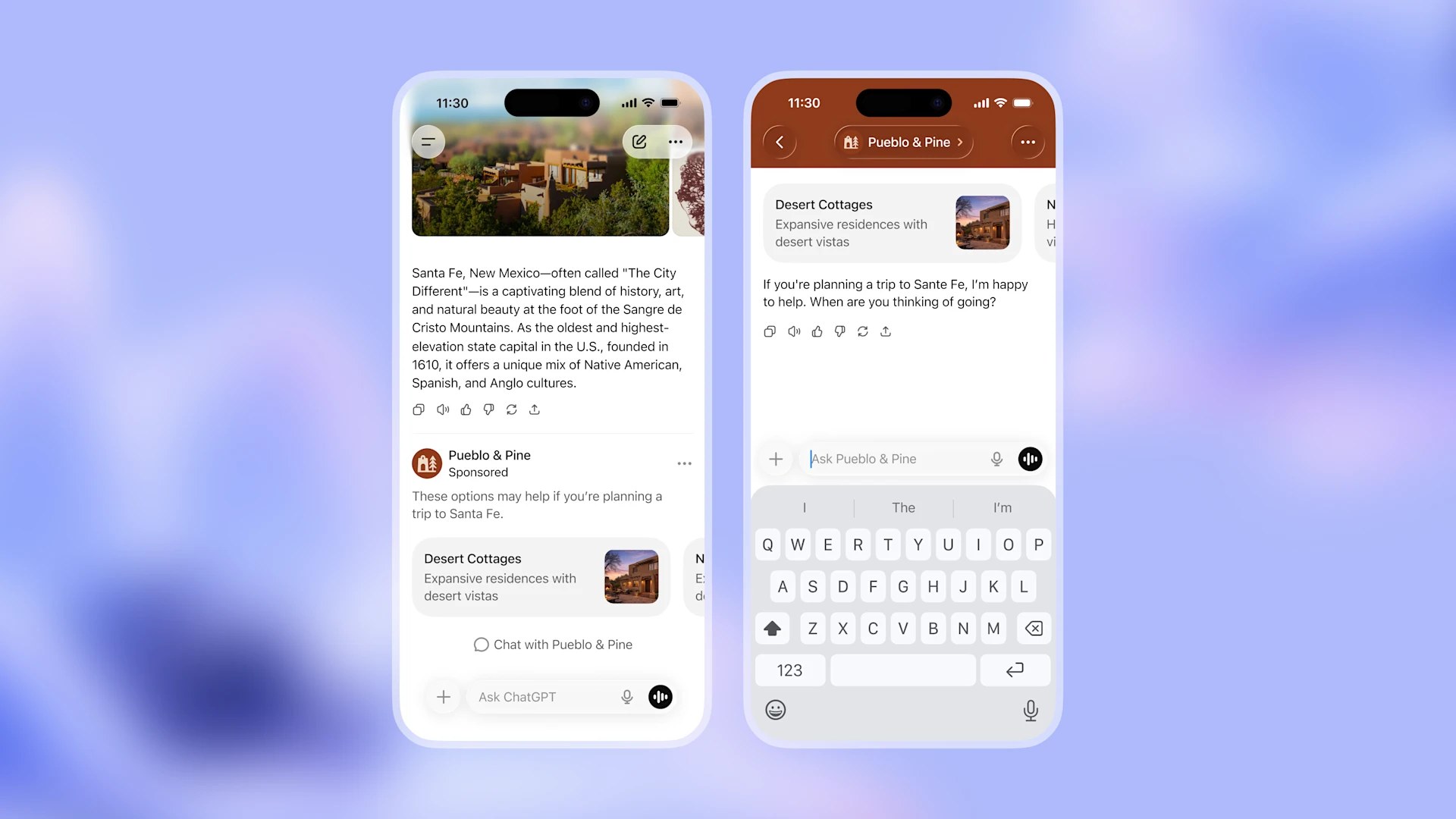
OpenAI has officially shed its image as a non-profit research lab. Sam Altman is transforming ChatGPT into a high-traffic commercial storefront with the launch of a self-service advertising platform. According to Head of Monetization Asad Awan, the company has eliminated the steep entry barrier of $50,000 required during the pilot phase. The gates are now open for small businesses, offering a full-featured ad manager reminiscent of early-stage Facebook.
Currently in beta for U.S. advertisers, the Ads Manager offers standard industry models: pay-per-impression (CPM) and pay-per-click (CPC). However, the ambitions behind this move extend far beyond simple testing. OpenAI is targeting $100 billion in revenue by 2030. To scale its current advertising revenue from a modest $100 million to a hundred billion, the company is aggressively building the infrastructure needed to siphon budgets away from Google and Meta. Global advertising giants like WPP, Omnicom, Publicis, and Dentsu are already on board, with Adobe and Criteo providing the technological backbone.
For performance marketers focused on ROI, OpenAI has introduced conversion APIs and pixel tracking. This allows brands to link lead generation and sign-ups directly to interactions within the AI chat. While the company insists that ads do not influence model responses and that user data remains private, the move toward click-based billing creates an inherent tension. It is difficult to remain an "impartial assistant" when your primary KPI depends on how effectively you nudge a user toward a sponsored link.
While OpenAI promises that brand presence won't degrade the user experience, the reality looks different. We are witnessing the construction of a high-precision auction for human attention. Under the guise of helping you find the perfect pair of sneakers, the company is monetizing the exact moments the model offers advice. There is a certain irony here: OpenAI is building the very system of contextual pressure it once promised to disrupt in the search market.