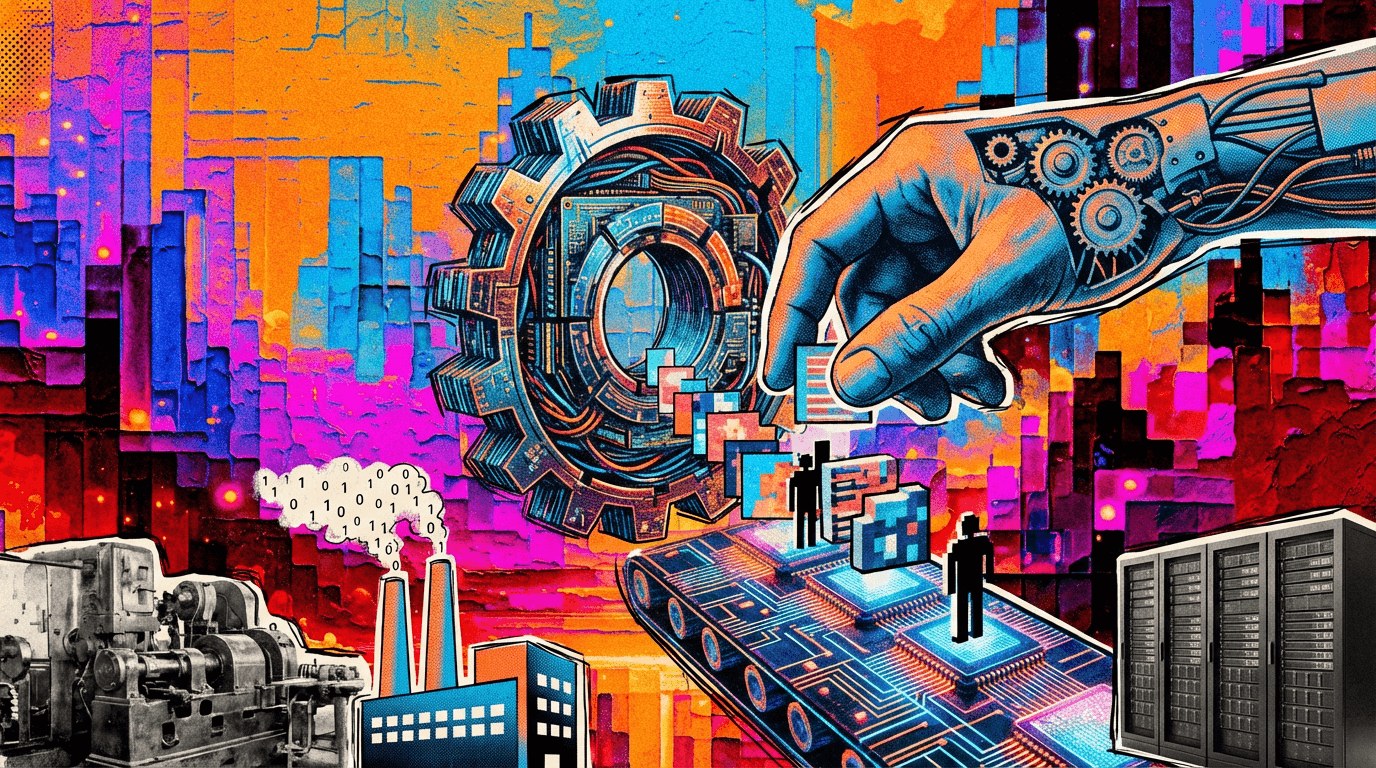
OpenAI, after establishing itself as a central force in artificial intelligence, has put forth a proposal that extends beyond mere model development and prompt engineering. In a 12-page document titled "The Coming Age of Intelligence Industrial Policy," the company outlines concrete policy mechanisms for managing the advent of superintelligence. The core message is a shift from a purely technological focus to embracing social engineering and wealth redistribution.
The proposed measures, which include sovereign wealth funds, taxes on AI-driven superprofits, direct citizen payments, and experiments with a four-day work week, blend Keynesian economic principles with futuristic aspirations. OpenAI states its goal is to prevent the benefits of advanced AI from concentrating in the hands of a few, including OpenAI itself, and instead to frame access to cutting-edge AI technologies as a fundamental right. Just as literacy and electricity became essential in previous eras, AI is positioned as the next foundational requirement.
This initiative is framed not as a mere wish, but as a proactive attempt to shape the future regulatory landscape. OpenAI draws historical parallels to the Progressive Era and Roosevelt's New Deal, suggesting that the pace of change driven by AI will leave businesses with little time for deliberation. AI systems are poised to solve complex problems that currently require months of human effort. In this context, OpenAI argues, ensuring a place in the governance of the future AI-driven economy is as critical as mitigating existential risks. The critical question now is who will set the rules and who will merely follow them.
This is important because OpenAI's proposals are not just predictions; they represent an effort to initiate a discussion about the regulation and redistribution of economic benefits stemming from AI. Should superprofits from AI be taxed, for example, at a 20% rate, this could reduce the profitability of new AI startups by 5-10% and necessitate a revision of business models. For venture capitalists, this serves as a signal to re-evaluate investments, considering not only technological novelty but also a startup's readiness to adapt to a new fiscal and social environment. Ignoring OpenAI's proposed scenarios means deliberately forfeiting the opportunity to influence the formation of rules for the future AI economy, risking a situation where all key decisions are made without your input. While you wait for someone else to establish the rules, others are already writing them, potentially converting your prospective success into their extraordinary profits.