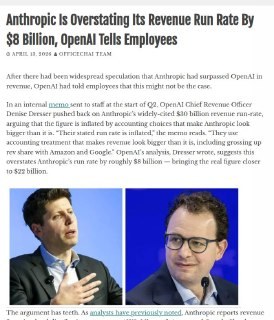
The battle for dominance in the AI sector has devolved into a bitter accounting spat. According to data from Data Secrets, OpenAI has allegedly leaked an internal memo accusing Dario Amodei’s team at Anthropic of manipulating their financial reporting. Sam Altman’s nervousness is easy to understand: rumors have been swirling that Anthropic’s annual revenue run-rate has surged past $30 billion, effectively leaving OpenAI’s $24–25 billion in the dust.
In an industry where sky-high valuations depend entirely on growth momentum, this shift represents a direct threat to future funding rounds. OpenAI’s grievance centers on what they call 'accounting magic.' They claim Anthropic is booking gross revenue from partnership deals with Google and Amazon without deducting the cloud giants' substantial cuts. OpenAI estimates this maneuver inflates their rival’s figures by roughly $8 billion. Strip away this financial phantom, and the status quo returns: Anthropic’s actual run-rate remains a few billion dollars behind OpenAI’s. While using gross figures instead of net revenue is a classic pitch-deck trick, these disputes become a matter of survival when model training costs burn through cash faster than it arrives.
This strategic leak isn't a plea for fairness; it’s a calculated move to stop capital from flowing to competitors. As long as the actual profitability of LLM solutions fails to keep pace with bills from chip suppliers, 'impressive growth charts' remain the primary product these companies sell. The public shaming of Anthropic reveals a harsh reality: behind the high-minded rhetoric about the future of humanity lies a desperate scrap for every percentage point of margin left over after the server owners take their share.
For CEOs and investors, this scandal serves as a major warning: transparency in the AI sector is effectively dead. This saga of 'manufactured billions' means that any report on the ROI of model implementation now requires a rigorous audit. When an AI startup boasts about its revenue, your first question should be: how much of that money actually stays in their pockets, and how much is just passing through to their cloud providers?